
Vimala Temple
About
The temple occupies the southwest corner of the Jagannath complex's inner enclosure, at the western side of Jagannath's great tower and beside the sacred pond called Rohini kunda. Facing east and raised in sandstone and laterite, it follows the Deula manner of building in four parts: the vimana that holds the sanctum, the jagamohana or assembly hall, the nata-mandapa for festivals, and the bhoga-mandapa where offerings are made. The Archaeological Survey of India, Bhubaneswar Circle, maintains the temple and renovated it around 2005.
Though small beside the great shrine of Jagannath, Vimala's temple is held by Goddess-oriented Shakta and Tantric worshippers in even higher reverence than the main sanctuary. Vimala is understood as the Tantric consort of Jagannath, a Tantric form of Lakshmi and the guardian of the whole complex. Devotees offer their respects to Her before they approach Jagannath, and the food presented to Jagannath becomes Mahaprasad only once it has also been laid before Vimala.
Within the sanctum, an inner chamber of the sixth century bare of wall ornament, the Goddess is enthroned upon a simhasana flanked by Her attendants Chhaya and Maya. Her upper right hand holds a rosary, Her lower right is opened in the gesture of granting boons, and Her lower left bears a pitcher believed to hold amrita, the celestial elixir; what the upper left hand carries has long been disputed, and She holds none of the weapons usual to Durga. The image, said to be fashioned of lakha wax, rises slightly above four feet. At the temple's entrance a Gaja-Simha, the lion who is Her mount riding upon an elephant, proclaims the victory of good over evil, and the inner walls of the nata-mandapa carry Pattachitra paintings of sixteen forms of the Goddess, the Mahavidyas among them.
The great festival here is Durga Puja, kept for sixteen days in the month of Ashvin, in October, and completed on Vijayadashami, when the titular Gajapati king of Puri worships Vimala as Durga, slayer of Mahishasura. Through the year the Goddess is described as living upon the Uchchhishta, the remnants of Jagannath's meals; only during Durga Puja is separate food cooked for Her, when, in strict secrecy before dawn and according to Tantric rites, She receives non-vegetarian offerings, the sacrifice of a he-goat and fish from the tank of the Markanda temple.
History
The central icon of Vimala belongs to the sixth century CE, while the present building, judged by its architecture, appears to have risen in the ninth century under the Eastern Ganga dynasty, perhaps upon the ruins of an older temple; it resembles the ninth century Narasimha shrine near the Mukti-mandapa within the same complex. The Madala Panji credits the construction to Yayati Keshari, a ruler of the Somavashi dynasty of South Kosala, a title carried by both Yayati I, who reigned from about 922 to 955, and Yayati II, from about 1025 to 1040. The attendant deities and the slab behind the central image show the Somavashi manner and may survive from the earlier temple. Vimala is believed to be older than the central shrine of Jagannath itself. The philosopher and saint Adi Shankara, of about the eighth century, is held to have founded the Govardhana matha at Puri and installed Vimala as its presiding goddess. In the account of Starza, the Jagannath temple once served the worship of the Trimurti of Brahma, Vishnu and Shiva with their consorts, together with Sarasvati, Lakshmi and Parvati, the three central forms of the Goddess. The Shri Vidya school of Goddess worship remained strong here until the seventeenth century, after which it and the Shaiva currents slowly receded before Vaishnavism, though remnants endure. The Tantric Panchamakara, embracing fish, meat, liquor, parched grain and ritual intercourse, gave way to vegetarian offerings and the dance of the Devadasis. King Narasimhadeva, reigning between 1623 and 1647, ended the offerings of meat and fish to the Goddess, though the custom was later partly restored, and today She receives them on special days.
Significance
In Goddess-centred worship Vimala presides over the Purushottama Shakta pitha of Puri, with Jagannath, a form of Vishnu or Krishna, honored as its Bhairava, a striking departure from the usual pattern in which Bhairava is a form of Shiva; the equation of Vishnu with Shiva here is read as a teaching of the oneness of God, and Vimala is accordingly also understood as Lakshmi, while Tantrics regard Jagannath as Shiva-Bhairava. The scriptures name the site variously: the Pithanirnaya of the Tantrachudamani calls it Viraja-kshetra in Utkala, where the navel of Sati fell, though one version speaks instead of Her Uchchhishta falling at Nilachal, the Blue mountain; the Kalika Purana and the Hevajara Tantra place Katyayini and Jagannath at the western pitha of Oddiyana or Udra; the Kubjika Tantra counts Vimala among Forty Two Siddha Pithas; and the Devi Bhagavata Purana, Prana Toshini Tantra, Brihan Nila Tantra, Matsya Purana, Vamana Purana and Devi Purana all honor Her seat. Vimala is identified in text and rite with Katyayini, Durga, Bhairavi, Bhuvaneshvari and Ekanamsha. The people of Odisha take pride in Her temple, reciting before Her the Devi Mahatmya of the sage Markandeya, Adi Shankara's Debyaparadhakshyamapana stotram and the Vimalastakam of Purusottam Rakshit, and holding holy the waters of Rohini kunda, Her sacred pool.
Visiting
Engage with Vimala Temple
Through the four pathways
Seva सेवा — Service
Offer your time and skills here. The following opportunities are open at Vimala Temple:
No Seva offerings listed yet.
Sādhana साधना — Practice
Learn the worship and practice associated with Vimala Temple:
No Sādhana offerings listed yet.
Sandhāna सन्धान — Wisdom
Unite with the wisdom of this tradition:
No Sandhāna offerings listed yet.
Sādhya साध्य — Giving
Support this sacred place according to your means:
No Sādhya offerings listed yet.
All giving flows directly to Vimala Temple. Adisthan does not take a commission.
Related sacred places
 Hinduism
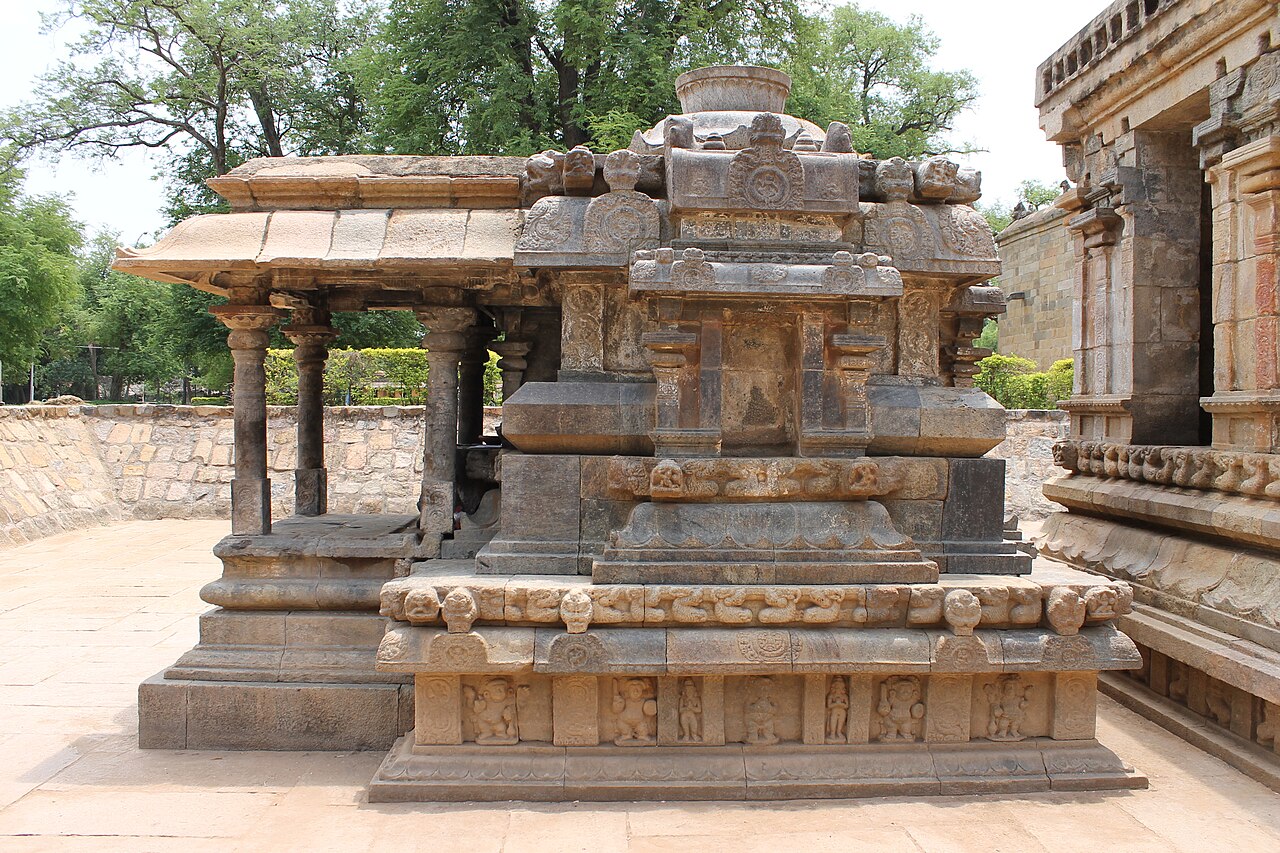
Airavatesvara Temple
· India · temple
A jewel of 12th-century Chola craftsmanship at Darasuram near Kumbakonam in Tamil Nadu, this Śaiva shrine dedicated to Lord Śiva stands among the UNESCO-listed Great Living Chola Temples for its extraordinary sculptural refinement.
Aisanyesvara Siva Temple
· India · temple
A living Śaiva temple from the thirteenth century, nestled near the western boundary of the great Lingarāja complex in Bhubaneswar, Odisha, where a Śivaliṅgam receives daily worship and the sacred rhythms of the liturgical year continue unbroken.
 Hinduism
Akhadachandi Temple
· India · temple
A 10th-century Hindu temple in the heart of Bhubaneswar's old town, Akhadachandi Temple stands on the southwestern shore of the sacred Bindusagar tank, honouring the goddess Mahiṣāsuramardinī in the ancient Kalinga style.
 Hinduism
Akshardham
· India · temple
Swaminarayan Akshardham in Delhi is a vast Hindu mandir complex dedicated to devotion, learning, and harmony, drawing millions of pilgrims each year to its intricately carved sandstone and marble monument on the Yamuna's western bank.
 Hinduism
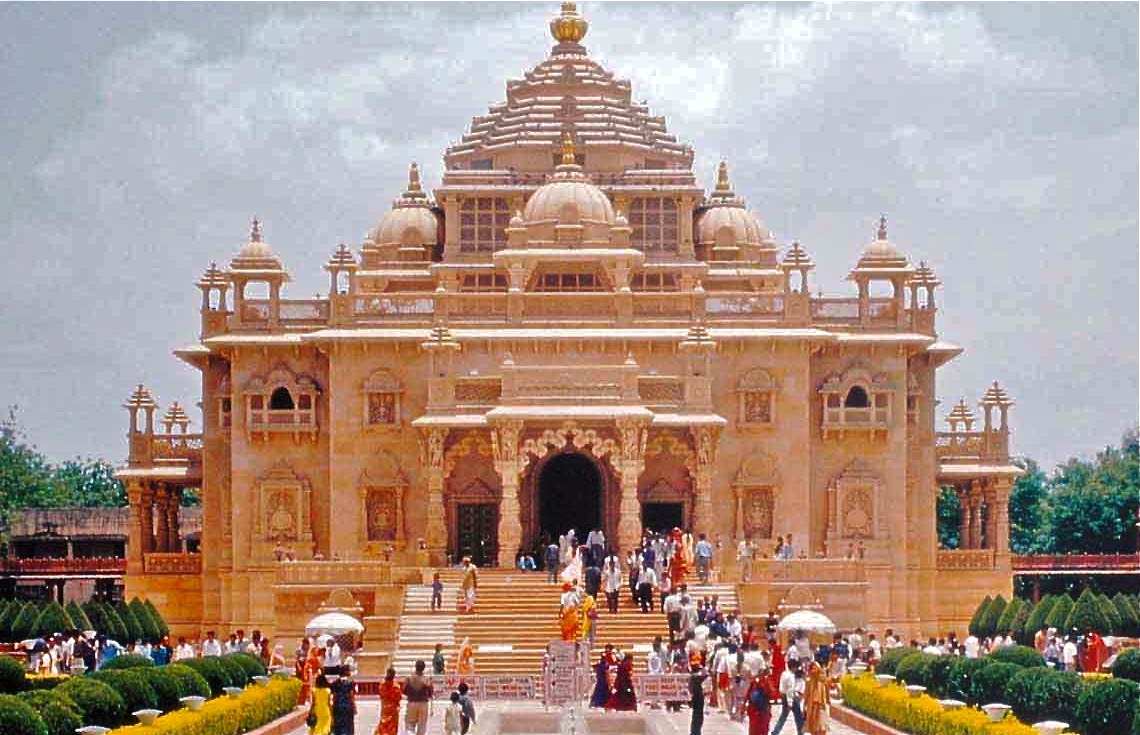
Akshardham (Gandhinagar)
· India · temple
A vast spiritual and cultural complex in Gujarat's capital, Gandhinagar, Swaminarayan Akshardham was conceived through the vision of Yogiji Maharaj and realized by Pramukh Swami Maharaj — a living testimony to the BAPS tradition's commitment to devotion, learning, and harmony.
 Hinduism
Alopi Devi Mandir
· India · temple
Alopi Devi Mandir is a Hindu temple in the Alopibagh neighborhood of Prayagraj, Uttar Pradesh, close to the sacred Sangam where the Ganges, the Yamuna, and the legendary Sarasvati are believed to converge.