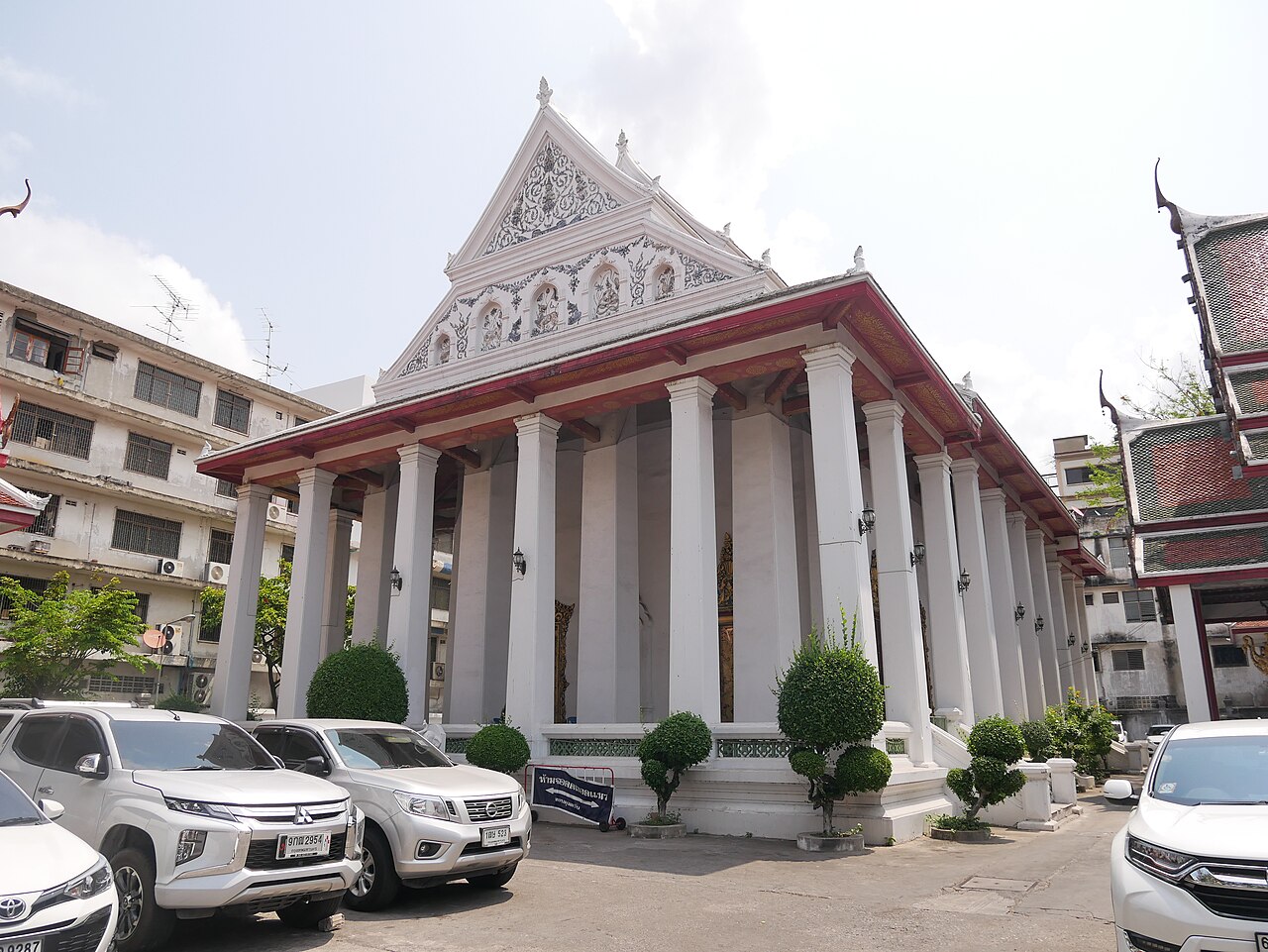
Wat Chakkrawat Rachawat Woramahawihan
Wat Chakkrawat · Wat Chakkrawat Ratchawat Woramahawihan · Wat Sam Pluem · วัดจักรวรรดิราชาวาสวรมหาวิหาร
About
Tucked into the northwestern corner of Samphanthawong district near the Chao Phraya River, Wat Chakkrawat, formally Wat Chakkrawat Rachawat Woramahawihan, has stood within Bangkok's Chinatown for more than two centuries. The wat sits a short distance from Wat Traimit, the home of the famous golden Buddha, and shares with it a quieter share of the neighbourhood's devotional life.
Known in earlier centuries as Wat Sam Pluem, the monastery predates the cutting of Yaowarat Road in 1892. Its roots reach back at least two hundred years to the reign of King Rama I, when Rattanakosin was first established as the new capital of Siam in 1782. The surrounding district, then called Sampheng, became home to Chinese merchants displaced from Tha Tian to make way for the Grand Palace.
During the reign of King Nangklao (Rama III), the nobleman Chaophraya Bodindecha undertook a six-year restoration of the entire complex and dug a khlong to drain water from the Temple pond. Once monks from other monasteries had been invited to reside, the renewed Temple was presented to the king and elevated to royal status in 1825.
A principal vihara once enshrined the Phra Bang Buddha image; when King Mongkut later returned that image to Luang Prabang, the Phra Nak was installed in its place. Beside the assembly halls a curious crocodile pond still exists, a quiet relic of a wartime story now woven into the Temple's local lore.
History
The monastery predates the founding of Bangkok itself, standing in what was then called Sampheng when Chinese merchants settled there after King Rama I moved them from Tha Tian to make way for the Grand Palace in 1782. Known in its early years as Wat Sam Pluem, it was rebuilt over six years by the nobleman Chaophraya Bodindecha during the reign of King Rama III, who invited monks from other monasteries to reside there before presenting the renewed Temple to the king for elevation to royal status in 1825. Rama III's own kathin visit later prompted further rebuilding, and in the reign of King Mongkut the Phra Bang Buddha image was returned to Luang Prabang and replaced by the Phra Nak image still enshrined today.
Significance
Beside its halls the wat keeps a modest pond that carries one of Chinatown's best-loved stories: during the Second World War a one-eyed crocodile preyed on the Chao Phraya's boatmen until a monk of this wat caught it and raised it here until it died naturally, giving the Temple its enduring local nickname. Together with its neighbour Wat Traimit, home of the great golden Buddha, Wat Chakkrawat anchors the devotional life of a district built by the Chinese community the kings of Siam once resettled here.
Architecture
Rattanakosin-period royal Thai Temple architecture, with a Chinese-influenced character typical of Bangkok's Chinatown
Visiting
Hours
Hours not listed.
Contact
No contact details listed yet.
Engage with Wat Chakkrawat Rachawat Woramahawihan
Through the four pathways
Seva सेवा — Service
Offer your time and skills here. The following opportunities are open at Wat Chakkrawat Rachawat Woramahawihan:
No Seva offerings listed yet.
Sādhana साधना — Practice
Learn the worship and practice associated with Wat Chakkrawat Rachawat Woramahawihan:
No Sādhana offerings listed yet.
Sandhāna सन्धान — Wisdom
Unite with the wisdom of this tradition:
No Sandhāna offerings listed yet.
Sādhya साध्य — Giving
Support this sacred place according to your means:
No Sādhya offerings listed yet.
All giving flows directly to Wat Chakkrawat Rachawat Woramahawihan. Adisthan does not take a commission.
Gallery
Related sacred places
 Buddhism
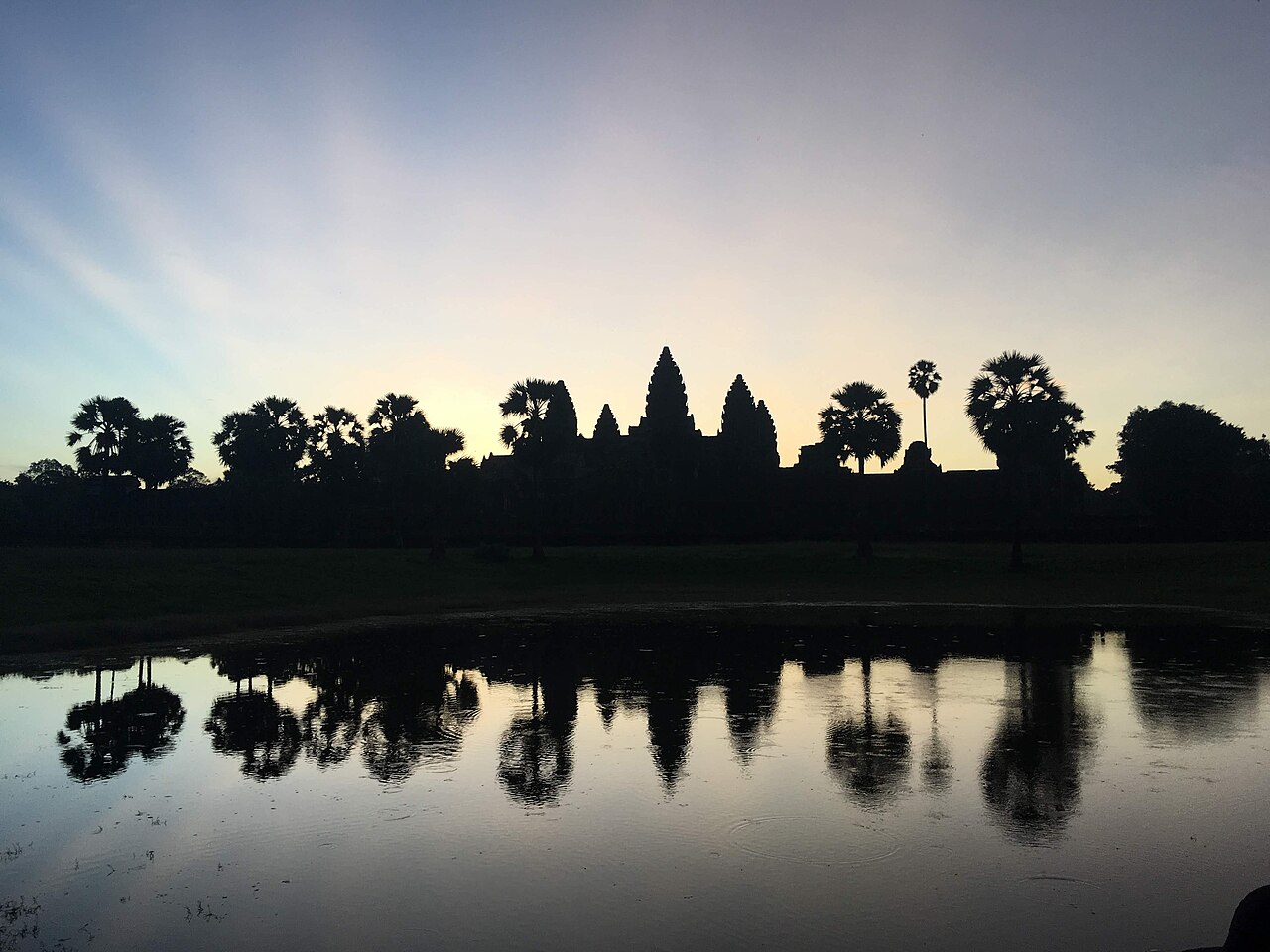
Angkor Wat
Siem Reap · Cambodia · temple
The largest religious monument on earth, built for Lord Vishnu by Suryavarman II in the 12th century and in continuous worship ever since: a living Theravada Buddhist Temple whose five towers stand on the Cambodian flag.
 Buddhism
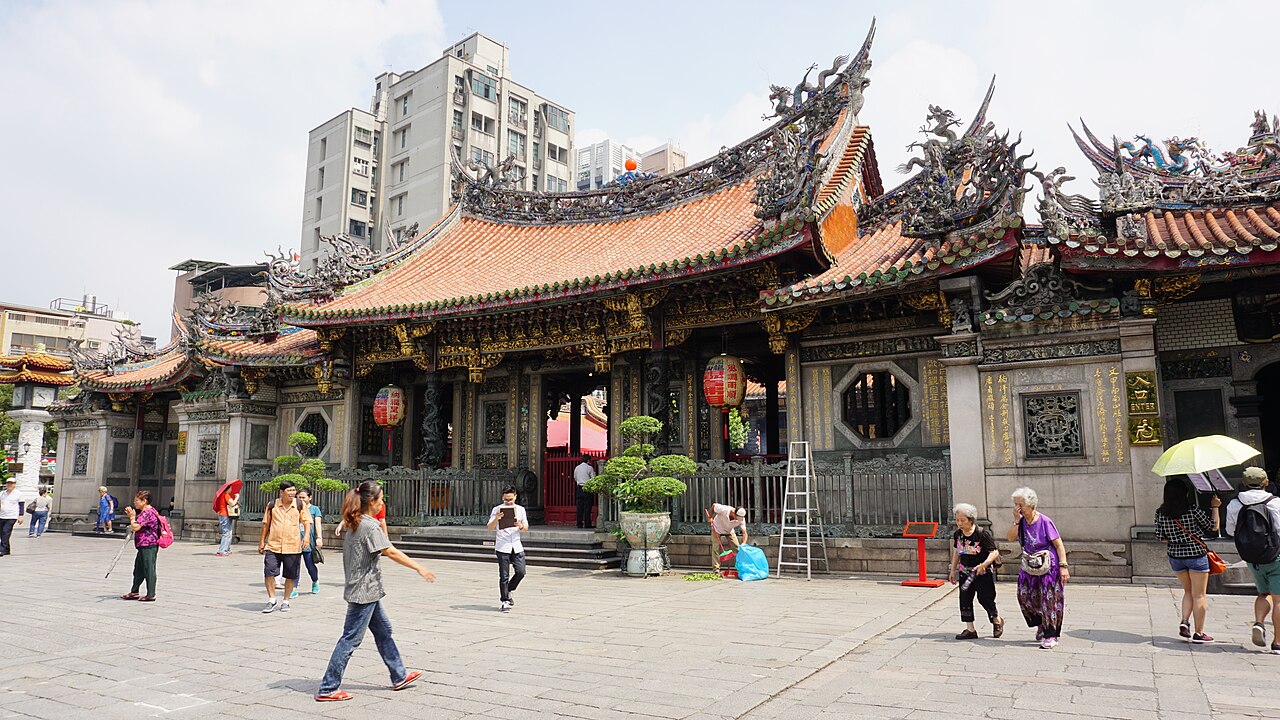
Bangka Lungshan Temple
Taipei (Wanhua) · Taiwan · temple
Taipei's mother Temple to Guanshiyin, founded by Fujian settlers in 1738 in the old Bangka quarter: a front hall to the bodhisattva of compassion and a rear hall of more than a hundred Taoist and folk gods, whose Guanyin statue survived the 1945 bombing intact.
 Buddhism
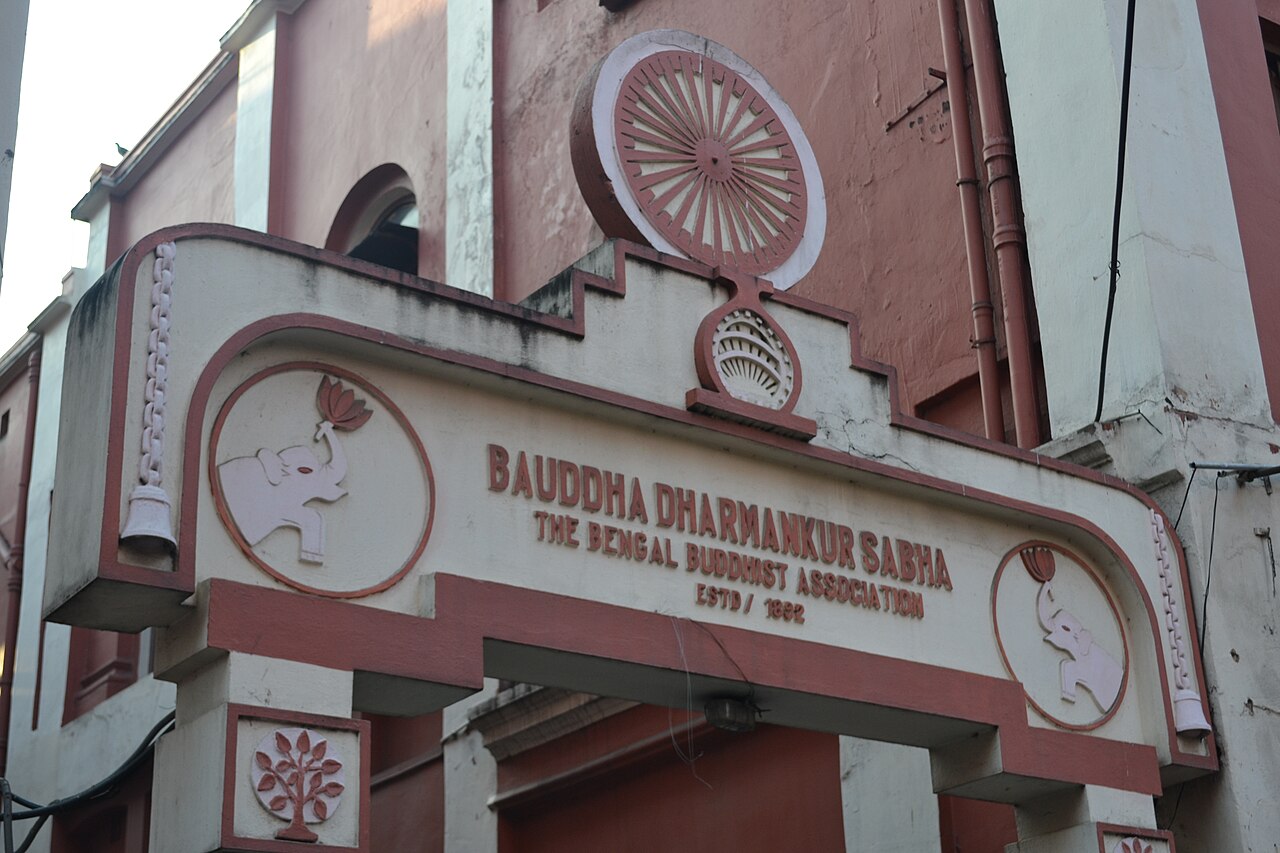
Bengal Buddhist Association
Kolkata · India · monastery
Founded in Kolkata in 1892 by Kripasaran Mahasthavir, the Bengal Buddhist Association, known in Bengali as Bauddha Dharmankur Sabha, raised the Dharmankur Vihara at Bow Barracks in 1903 and has worked for over a century to revive the Dharma in eastern India.
 Buddhism
Bhot Bagan Math
Ghusuri · India · monastery
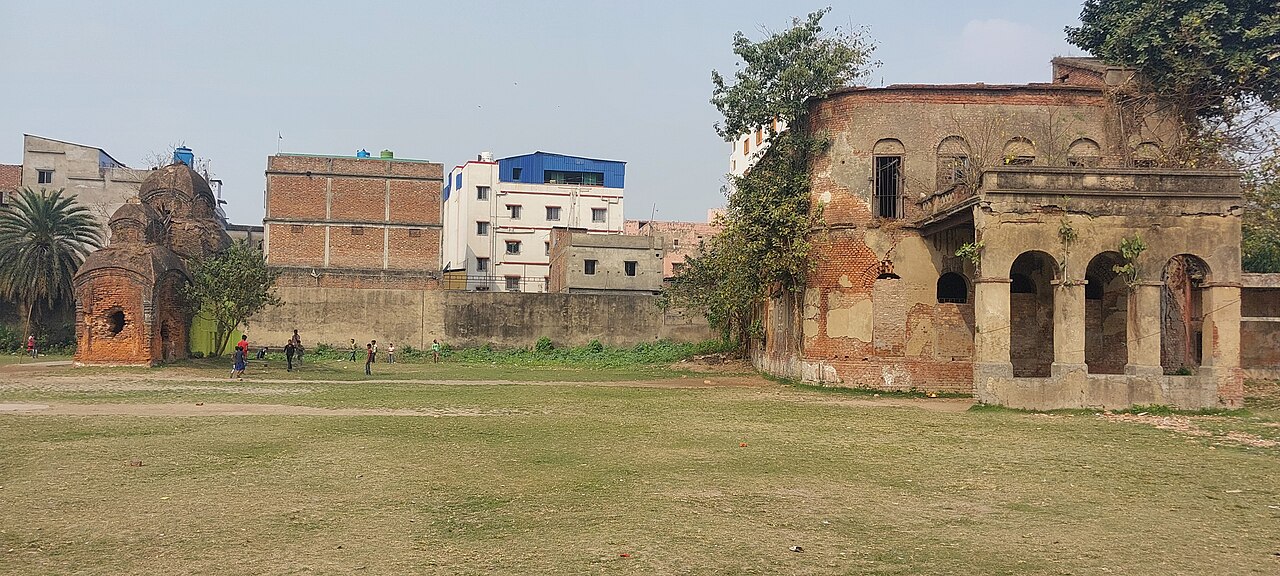
A brick monastery on the Hooghly riverside at Ghusuri, Howrah, founded in 1776 as the first Tibetan Buddhist religious foundation on the plains of India and still known popularly as Mahakal Math for the Tibetan deity images once installed in its sanctum.
 Buddhism
Borobudur
Magelang · Indonesia · temple
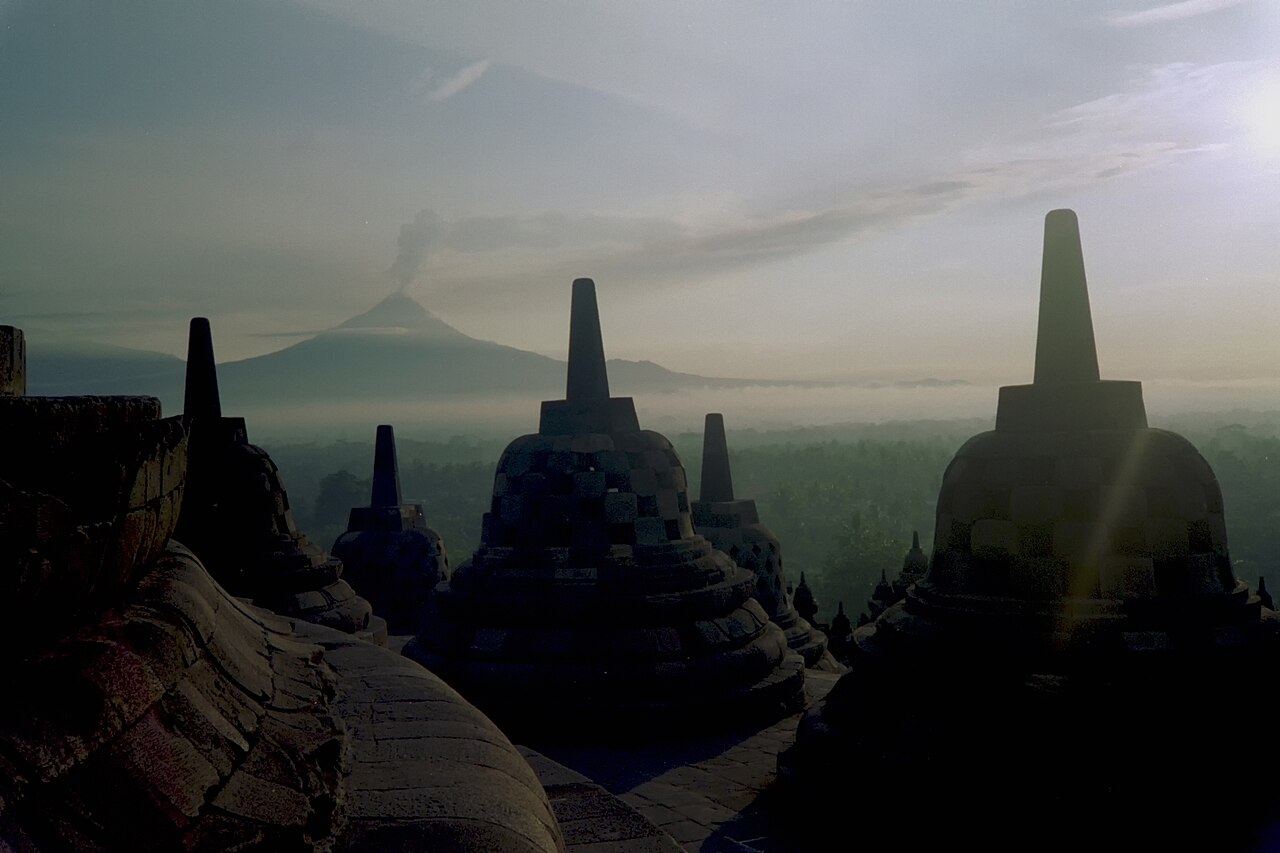
The world's largest Buddhist Temple: a ninth-century mandala in stone on Java's Kedu Plain, nine terraces rising through the three realms to 72 latticed stupas, each sheltering a seated Buddha.
 Buddhism
Boudhanath Stupa
Kathmandu · Nepal · stupa
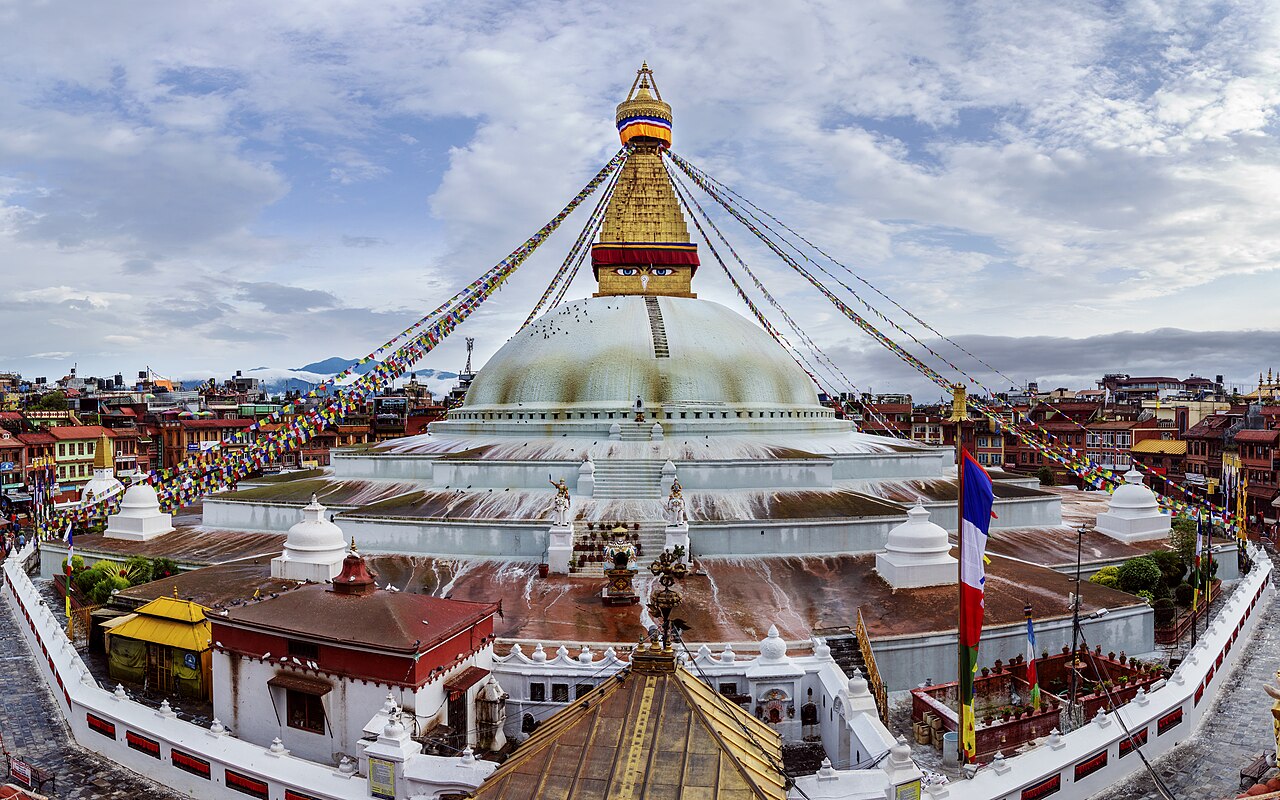
The largest spherical stupa in Nepal, its all-seeing Buddha eyes watching over the kora walked daily by the Tibetan Buddhist community of Boudha, the heart of Vajrayana practice in the Kathmandu Valley.