
Wat Chulamani
Wat Chulamanee · วัดจุฬามณี
About
Wat Chulamani lies in Wat Chulamani Village within Tha Thong Subdistrict of Mueang Phitsanulok, gathered close to the eastern bank of the Nan River in central-northern Thailand. It is recognised as the oldest standing Temple in the province, with foundations laid in the Sukhothai era.
The Temple is closely associated with King Borommatrailokkanat, who in the fifteenth century moved his capital to Phitsanulok and is said to have entered the monkhood at this very wat. Local tradition holds that the Temple's name honours the heavenly stupa known as Cūḷāmaṇi Cetiya, the celestial reliquary into which, according to Buddhist cosmology, the Bodhisatta's hair was received after his renunciation, and some accounts further link the king's ordination and hair-cutting ceremony to the precinct.
The wat is most celebrated today for the elaborate Khmer-style pagoda that anchors the grounds, a survival from the late Sukhothai period whose carved stucco and stepped tower mark it as among the finest of its kind in the region.
History
Wat Chulamani was raised in the Sukhothai era on ground that already marked the site of old Phitsanulok, and its Khmer-style prang, carved with figures of deities and mythical creatures beneath a lotus-shaped crown, survives as one of the most northerly monuments of Khmer architecture in the country. In the fifteenth century King Borommatrailokkanat moved his own capital to Phitsanulok and, tradition holds, entered the monkhood at this very wat, with more than two thousand of his royal servants ordaining alongside him. Local tradition further holds that the Temple's name honours Culamani Cetiya, the heavenly stupa said to enshrine the hair the Bodhisatta cut away at his renunciation, and some accounts connect that same story to the king's own ordination here.
Significance
The ancient prang now stands beside a later ubosot built in the same compound, so a visitor walking the grounds passes directly from the Sukhothai kingdom's brickwork into the living devotional life of a working Temple. Nearby the compound also holds a mondop built to shelter a footprint of the Buddha commissioned by King Narai, and a row of six bell-shaped chedis. For a city that has otherwise lost most of its old Temples, Wat Chulamani remains Phitsanulok's clearest surviving link to its founding centuries.
Architecture
Sukhothai-era Khmer-style prang, one of the northernmost surviving examples in Thailand, alongside later Temple buildings
Visiting
Hours
Hours not listed.
Contact
No contact details listed yet.
Address
Engage with Wat Chulamani
Through the four pathways
Seva सेवा — Service
Offer your time and skills here. The following opportunities are open at Wat Chulamani:
No Seva offerings listed yet.
Sādhana साधना — Practice
Learn the worship and practice associated with Wat Chulamani:
No Sādhana offerings listed yet.
Sandhāna सन्धान — Wisdom
Unite with the wisdom of this tradition:
No Sandhāna offerings listed yet.
Sādhya साध्य — Giving
Support this sacred place according to your means:
No Sādhya offerings listed yet.
All giving flows directly to Wat Chulamani. Adisthan does not take a commission.
Gallery
Related sacred places
 Buddhism
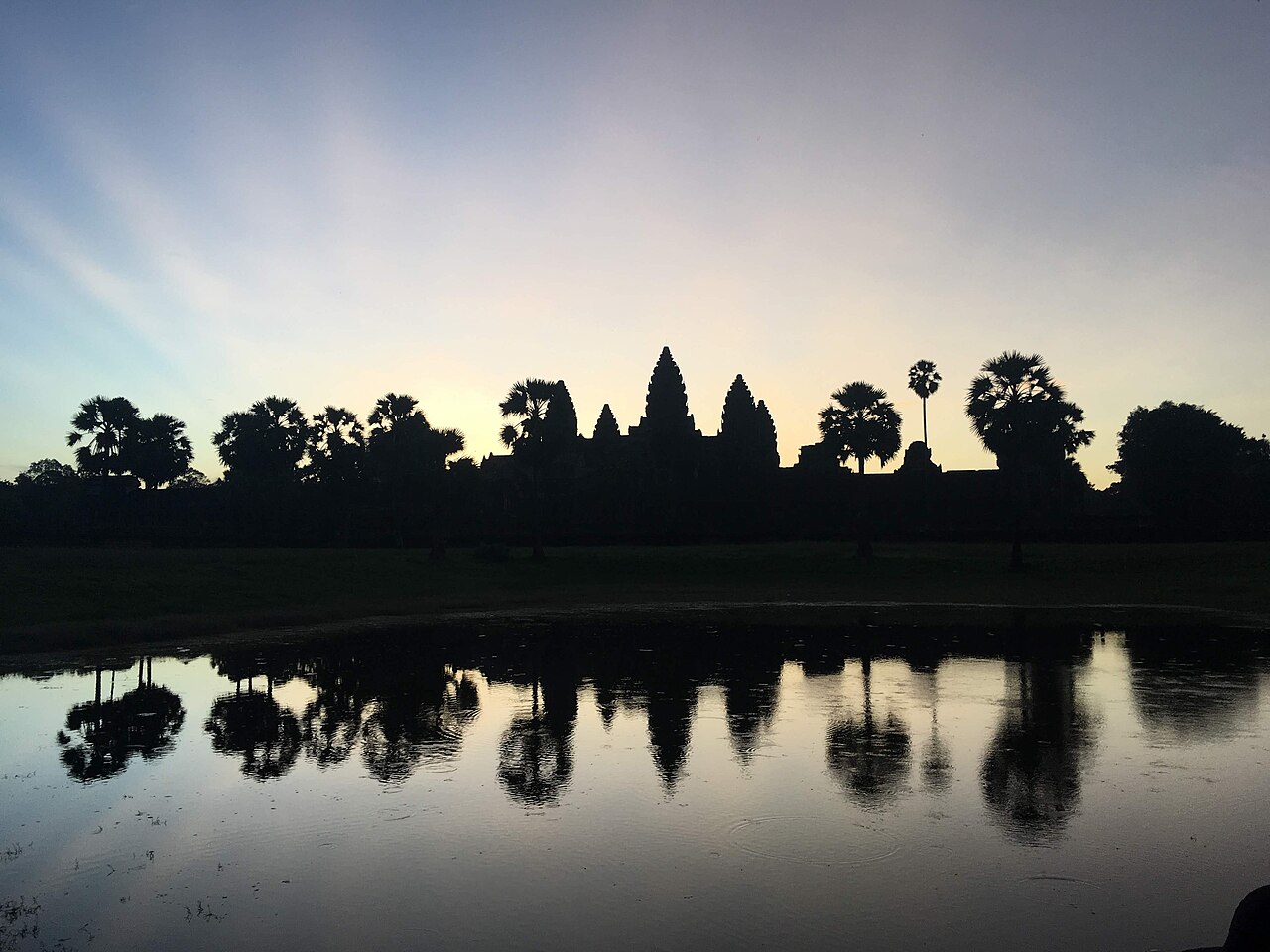
Angkor Wat
Siem Reap · Cambodia · temple
The largest religious monument on earth, built for Lord Vishnu by Suryavarman II in the 12th century and in continuous worship ever since: a living Theravada Buddhist Temple whose five towers stand on the Cambodian flag.
 Buddhism
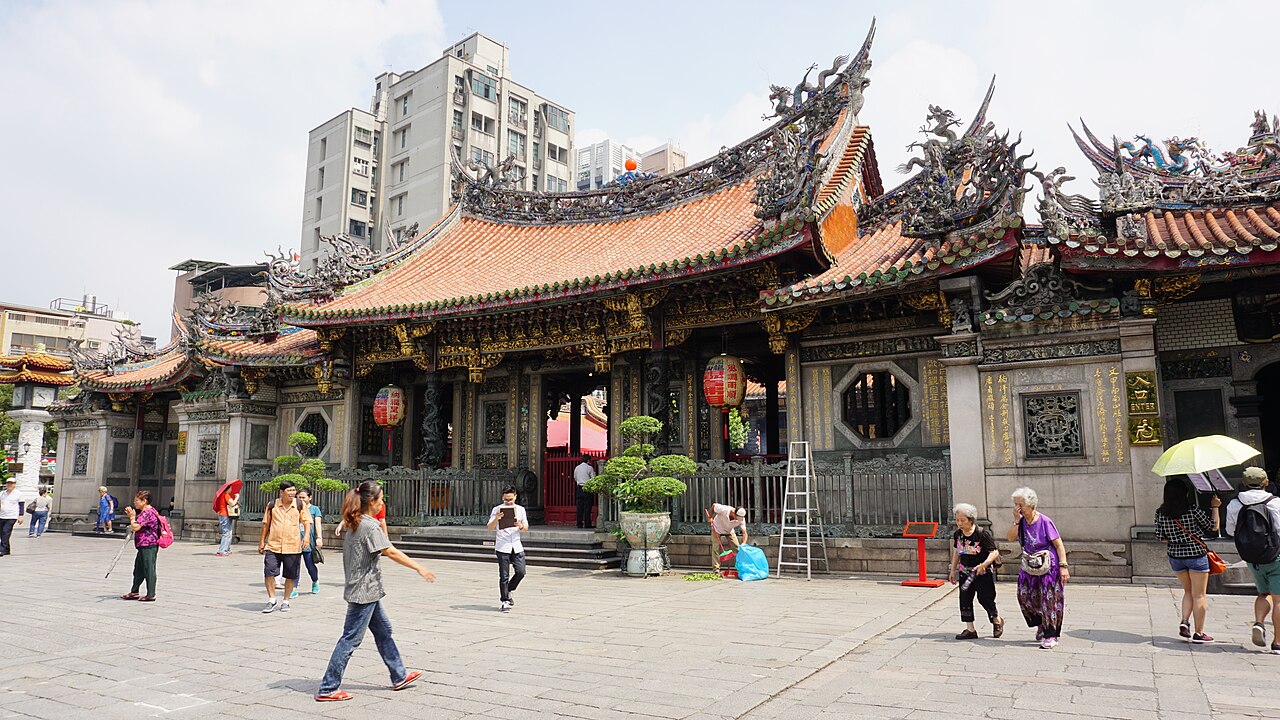
Bangka Lungshan Temple
Taipei (Wanhua) · Taiwan · temple
Taipei's mother Temple to Guanshiyin, founded by Fujian settlers in 1738 in the old Bangka quarter: a front hall to the bodhisattva of compassion and a rear hall of more than a hundred Taoist and folk gods, whose Guanyin statue survived the 1945 bombing intact.
 Buddhism
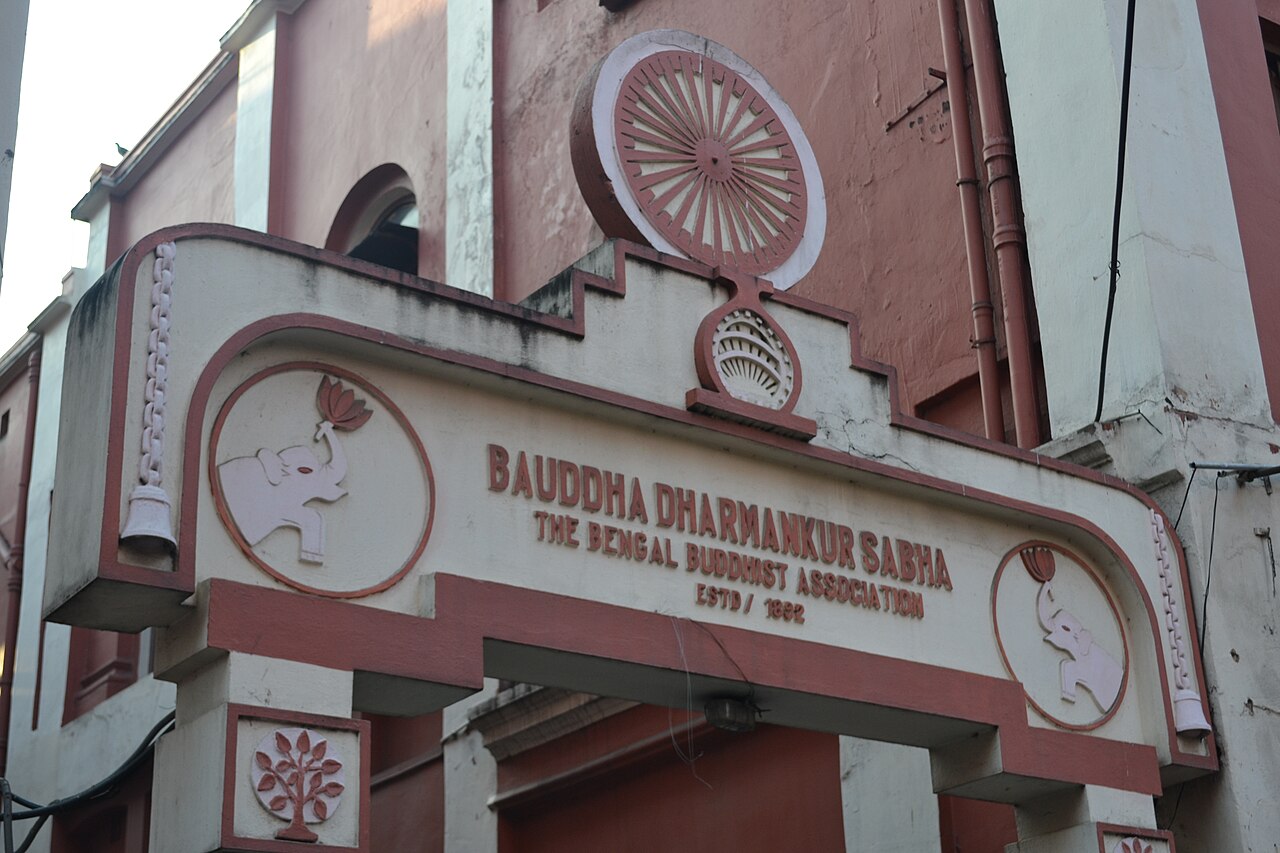
Bengal Buddhist Association
Kolkata · India · monastery
Founded in Kolkata in 1892 by Kripasaran Mahasthavir, the Bengal Buddhist Association, known in Bengali as Bauddha Dharmankur Sabha, raised the Dharmankur Vihara at Bow Barracks in 1903 and has worked for over a century to revive the Dharma in eastern India.
 Buddhism
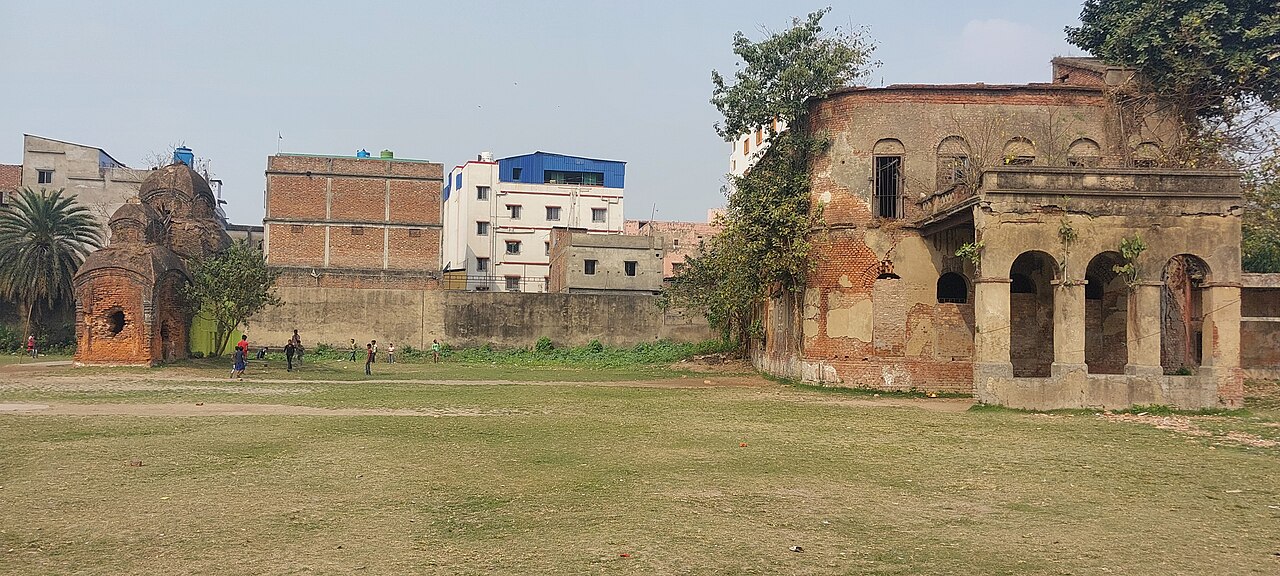
Bhot Bagan Math
Ghusuri · India · monastery
A brick monastery on the Hooghly riverside at Ghusuri, Howrah, founded in 1776 as the first Tibetan Buddhist religious foundation on the plains of India and still known popularly as Mahakal Math for the Tibetan deity images once installed in its sanctum.
 Buddhism
Borobudur
Magelang · Indonesia · temple
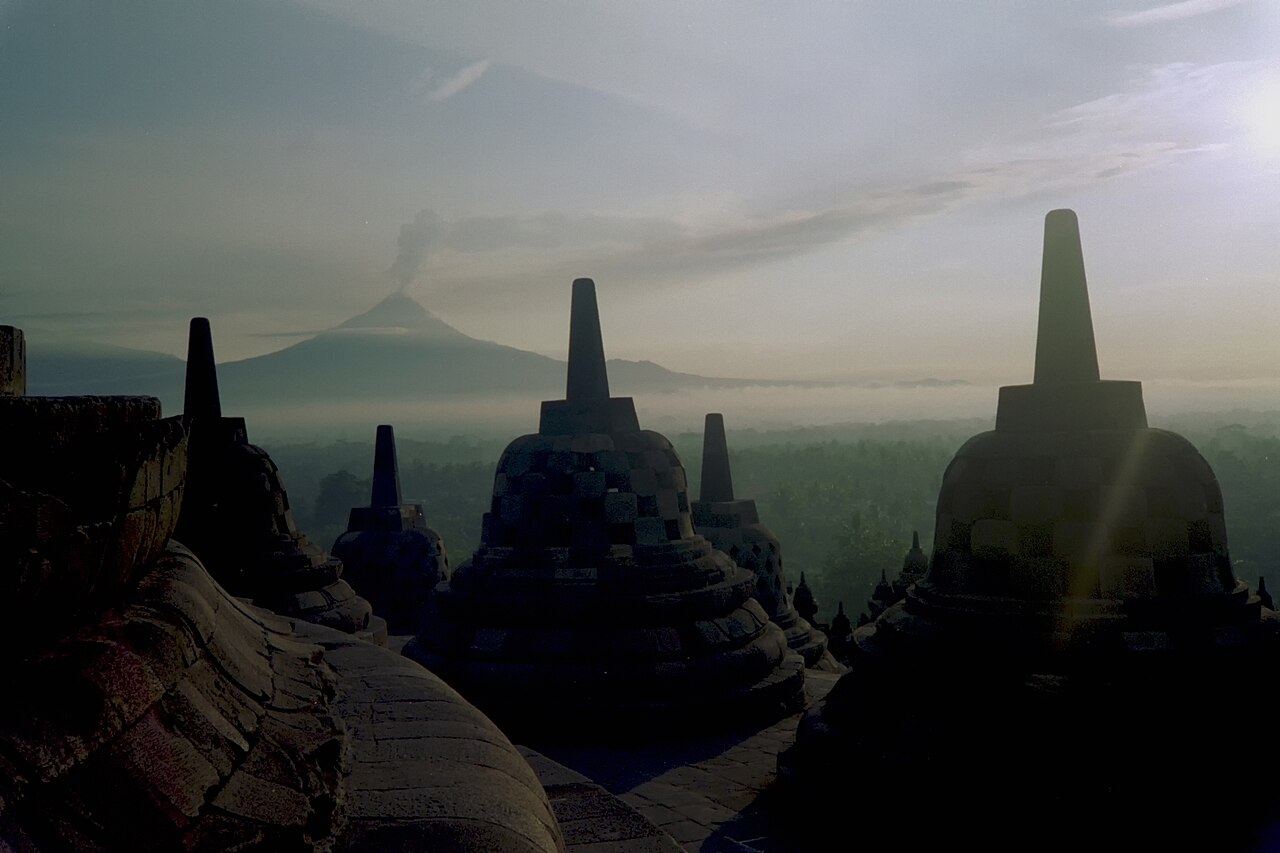
The world's largest Buddhist Temple: a ninth-century mandala in stone on Java's Kedu Plain, nine terraces rising through the three realms to 72 latticed stupas, each sheltering a seated Buddha.
 Buddhism
Boudhanath Stupa
Kathmandu · Nepal · stupa
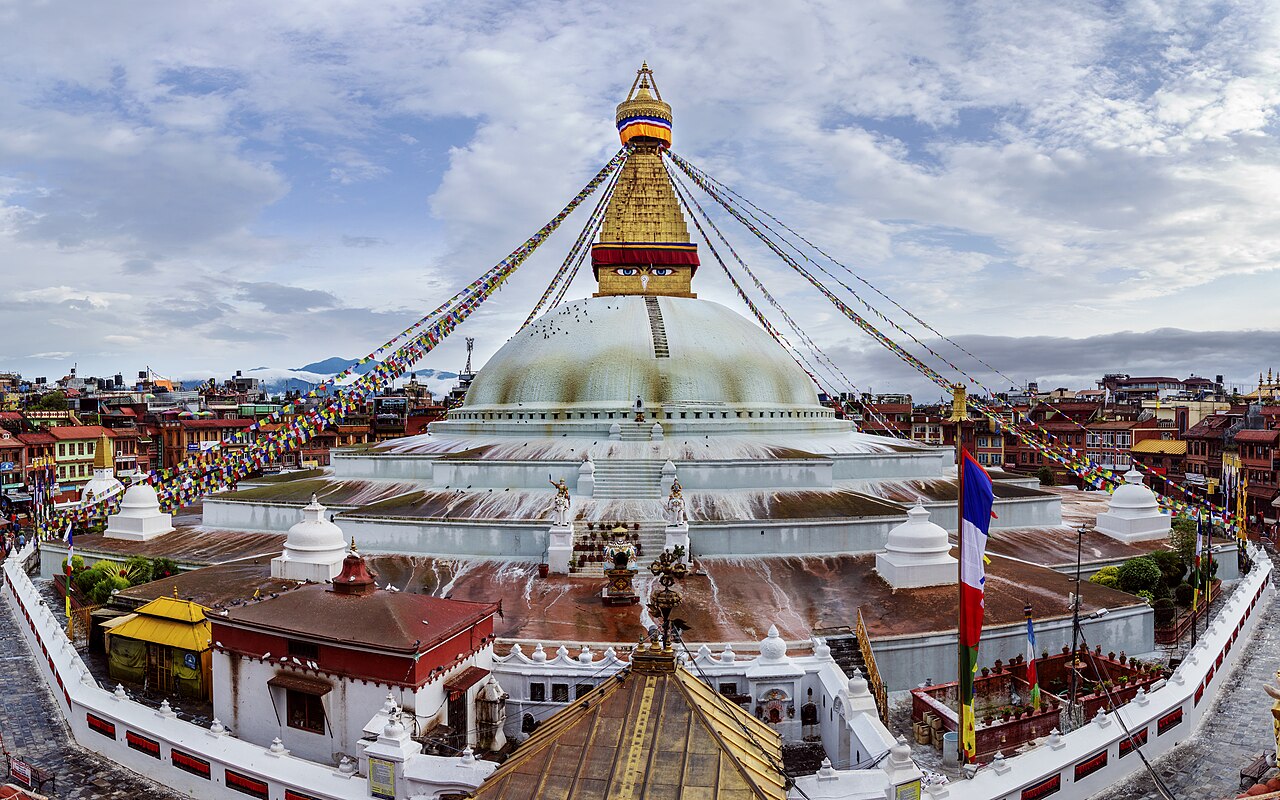
The largest spherical stupa in Nepal, its all-seeing Buddha eyes watching over the kora walked daily by the Tibetan Buddhist community of Boudha, the heart of Vajrayana practice in the Kathmandu Valley.