Wat Saket
About
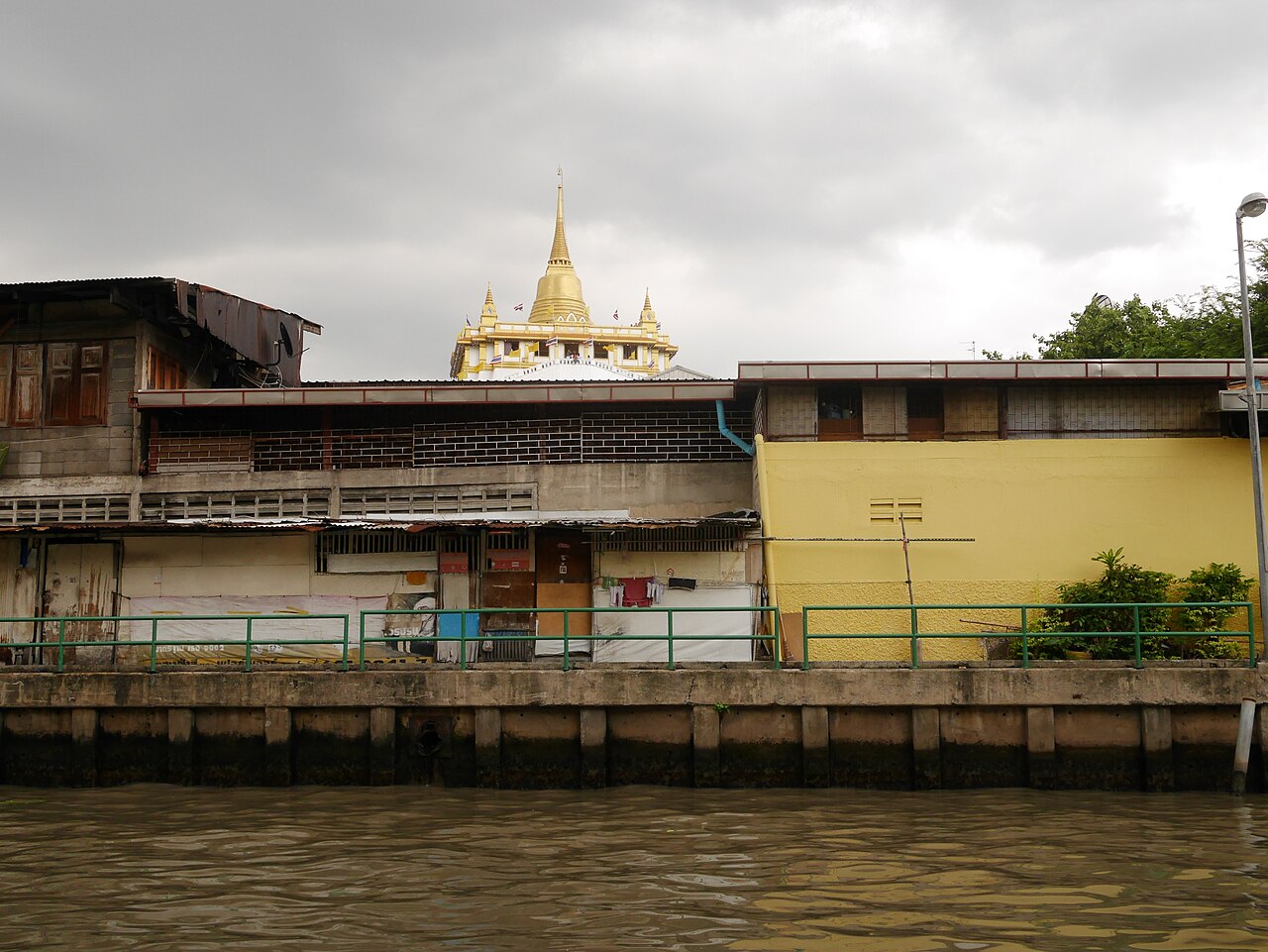
Wat Saket Ratchawora Mahawihan, Wat Saket in common speech, is a Buddhist Temple in the Pom Prap Sattru Phai district of Bangkok. Its earliest traces belong to the Ayutthaya era, during which it bore the older name Wat Sakae. After Bangkok became the new capital, King Rama I undertook a renovation and gave the Temple its present name, meaning 'to wash the hair', recalling that the king stopped here to bathe upon returning from a military campaign.
The most recognisable feature of the precinct is Phu Khao Thong, the 'Golden Mountain', a steep, hand-built hill rising within the wat compound. King Rama III had set out to raise an enormous chedi at this place, but the soft Bangkok soil could not bear its weight, and the structure collapsed during construction. Over decades the abandoned earth-and-brick mound was overgrown with plants until locals took it for a true hill and named it phu khao.
A smaller chedi was begun on the hill under King Rama IV, completed early under King Rama V and gilded thereafter. Prince Pritsadang brought a relic of the Buddha from Sri Lanka for its enshrinement. Concrete walls were later added to stop the hill from eroding.
Each November the Temple holds an annual festival, in which devotees ascend the Golden Mount in a candlelit procession. A long red robe is wrapped around the chedi, and worshippers write their names and those of their loved ones on the cloth, offering prayers in the hope of their fulfilment.
History
The Temple's roots reach into the Ayutthaya era, when the precinct was called Wat Sakae. After the founding of Bangkok in 1782, King Rama I renovated the wat and conferred its present name. The Phu Khao Thong began life as a failed chedi-construction project by King Rama III; the soft soil could not support the structure, which collapsed during building.
A new chedi atop the resulting hill was begun under King Rama IV and completed under King Rama V, who consecrated it by enshrining a relic of the Buddha that Prince Pritsadang had brought from Sri Lanka. The modern Temple buildings rose in the early twentieth century with Carrara marble construction. During the cholera outbreaks of the nineteenth century, Wat Saket served as Bangkok's main receiving ground for the dead, a sorrowful chapter remembered in the proverbial phrase 'vultures of Wat Saket'.
Significance
The Golden Mount has become a symbol of Bangkok itself. Devotees climb the steps each year in November, offering candles and inscribed cloth in a procession that links the city's modern devotion to a centuries-old tradition of relic veneration.
Visiting
Engage with Wat Saket
Through the four pathways
Seva सेवा — Service
Offer your time and skills here. The following opportunities are open at Wat Saket:
No Seva offerings listed yet.
Sādhana साधना — Practice
Learn the worship and practice associated with Wat Saket:
No Sādhana offerings listed yet.
Sandhāna सन्धान — Wisdom
Unite with the wisdom of this tradition:
No Sandhāna offerings listed yet.
Sādhya साध्य — Giving
Support this sacred place according to your means:
No Sādhya offerings listed yet.
All giving flows directly to Wat Saket. Adisthan does not take a commission.
Gallery
Related sacred places
 Buddhism
Angkor Wat
Siem Reap · Cambodia · temple
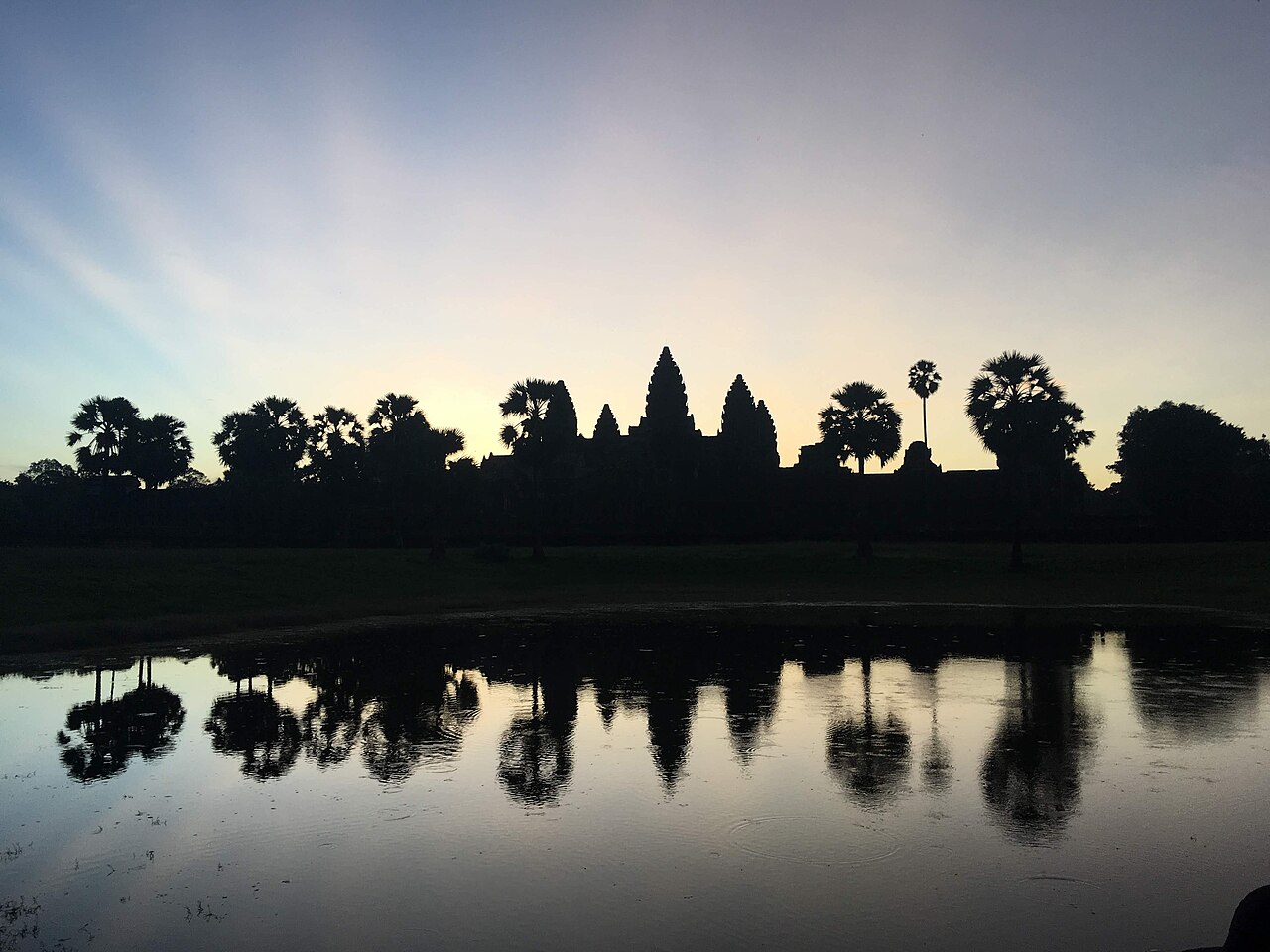
The largest religious monument on earth, built for Lord Vishnu by Suryavarman II in the 12th century and in continuous worship ever since: a living Theravada Buddhist Temple whose five towers stand on the Cambodian flag.
 Buddhism
Bangka Lungshan Temple
Taipei (Wanhua) · Taiwan · temple
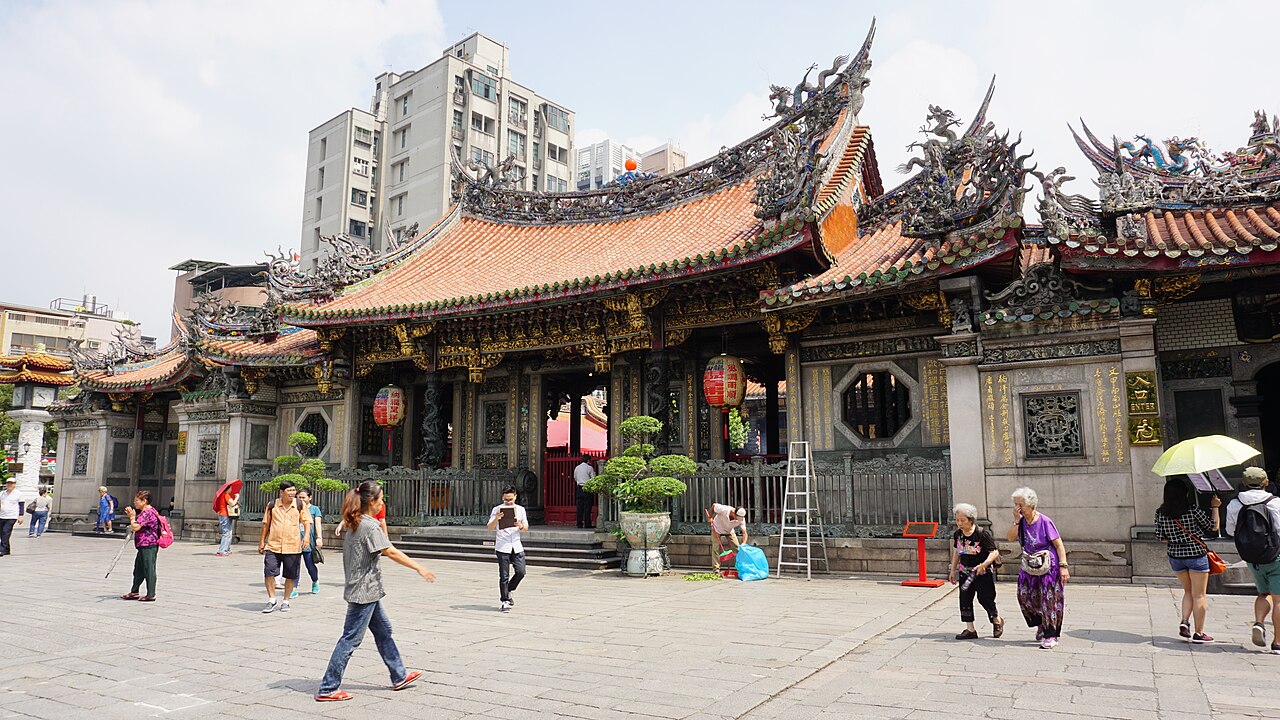
Taipei's mother Temple to Guanshiyin, founded by Fujian settlers in 1738 in the old Bangka quarter: a front hall to the bodhisattva of compassion and a rear hall of more than a hundred Taoist and folk gods, whose Guanyin statue survived the 1945 bombing intact.
 Buddhism
Bengal Buddhist Association
Kolkata · India · monastery
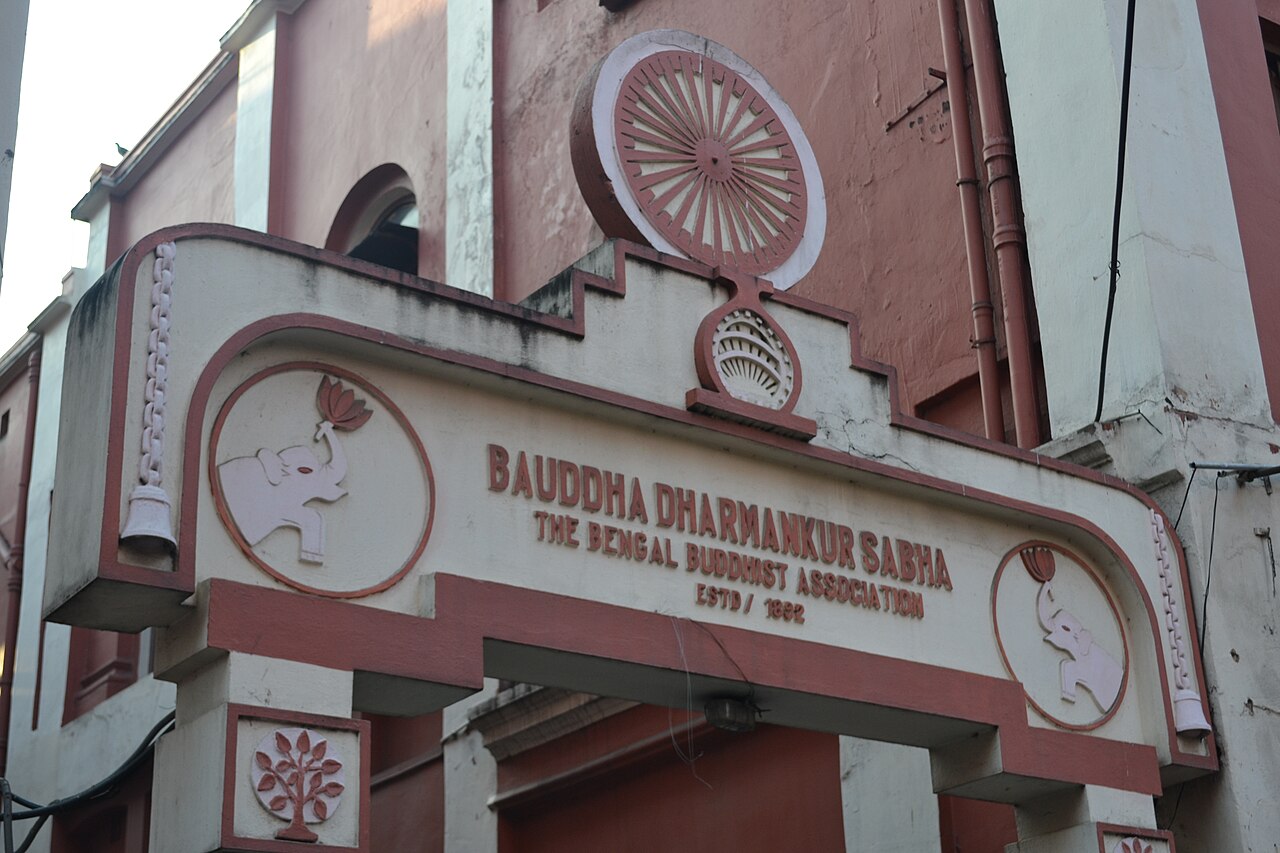
Founded in Kolkata in 1892 by Kripasaran Mahasthavir, the Bengal Buddhist Association, known in Bengali as Bauddha Dharmankur Sabha, raised the Dharmankur Vihara at Bow Barracks in 1903 and has worked for over a century to revive the Dharma in eastern India.
 Buddhism
Bhot Bagan Math
Ghusuri · India · monastery
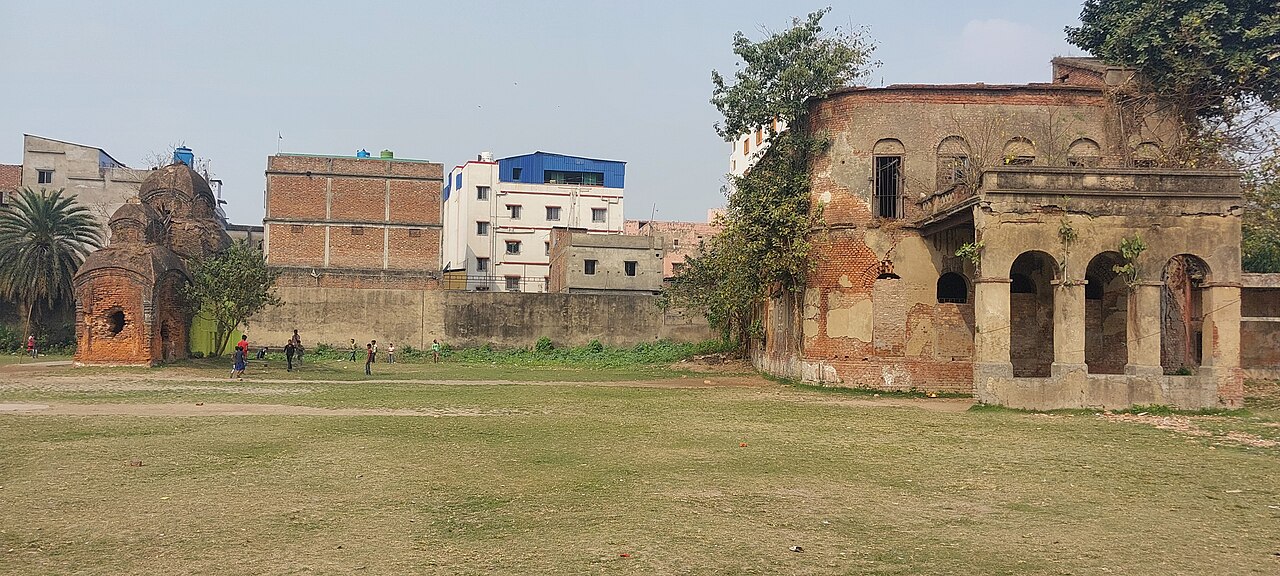
A brick monastery on the Hooghly riverside at Ghusuri, Howrah, founded in 1776 as the first Tibetan Buddhist religious foundation on the plains of India and still known popularly as Mahakal Math for the Tibetan deity images once installed in its sanctum.
 Buddhism
Borobudur
Magelang · Indonesia · temple
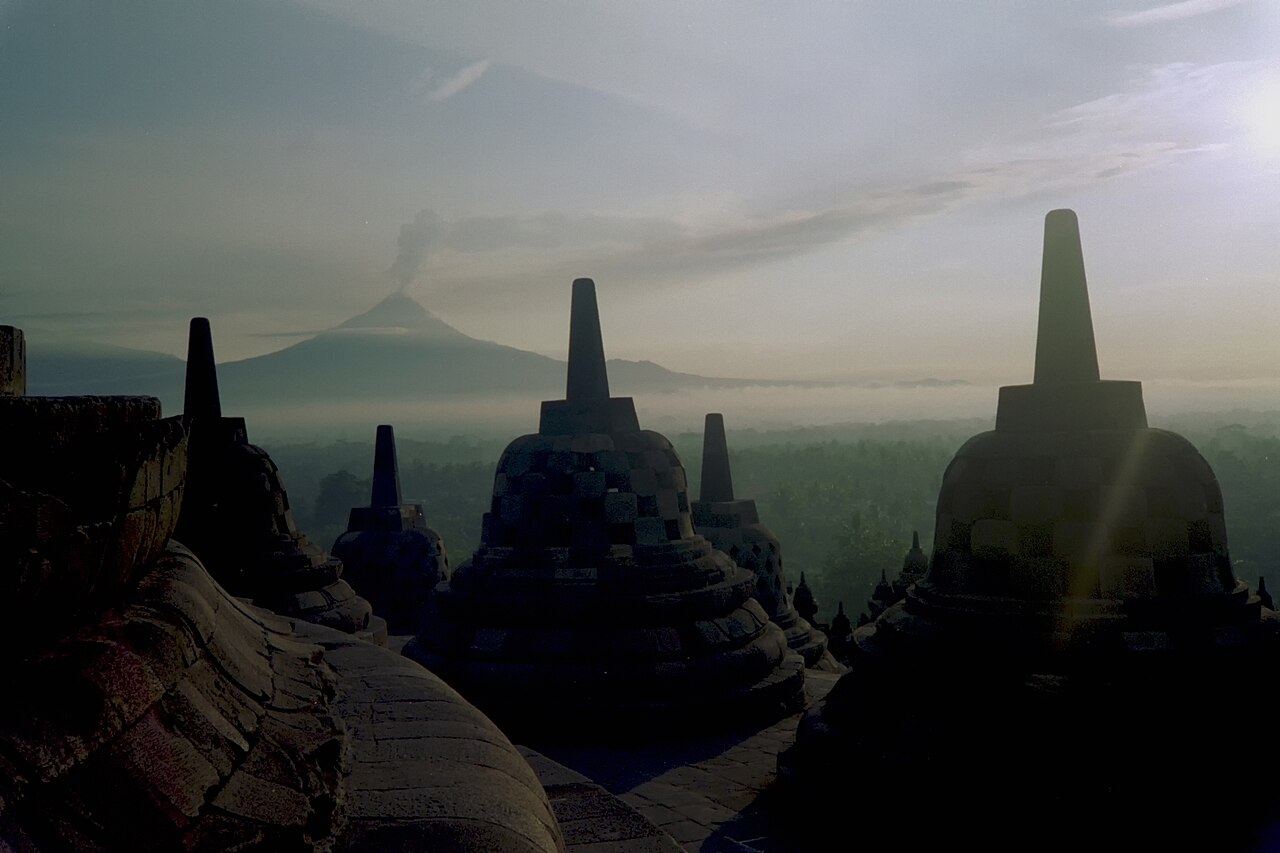
The world's largest Buddhist Temple: a ninth-century mandala in stone on Java's Kedu Plain, nine terraces rising through the three realms to 72 latticed stupas, each sheltering a seated Buddha.
 Buddhism
Boudhanath Stupa
Kathmandu · Nepal · stupa
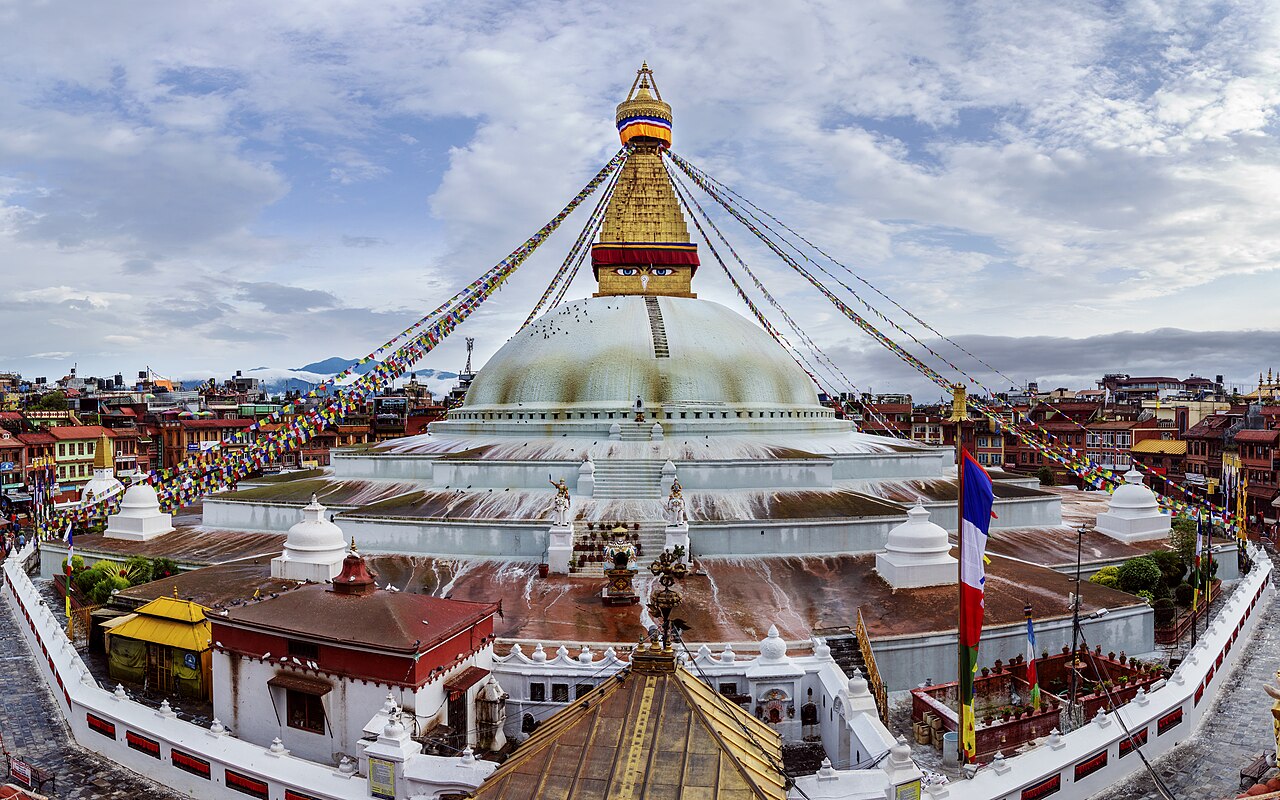
The largest spherical stupa in Nepal, its all-seeing Buddha eyes watching over the kora walked daily by the Tibetan Buddhist community of Boudha, the heart of Vajrayana practice in the Kathmandu Valley.