Wat Thepthidaram
About
Wat Thepthidaram Worawihan rises in the Samran Rat area of Bangkok, set close to the old Mahakan Fort and Wat Ratchanadda. Its name means 'the Temple of the celestial daughter', a fitting title for a foundation raised in royal devotion to a beloved princess.
The Temple was established in 1836 by King Nangklao (Rama III) in honour of his eldest daughter Princess Vilas, also known as Princess Apsorn Sudathep, who herself contributed personally to the construction. Completed in 1839, the precinct was given its royal name shortly afterwards.
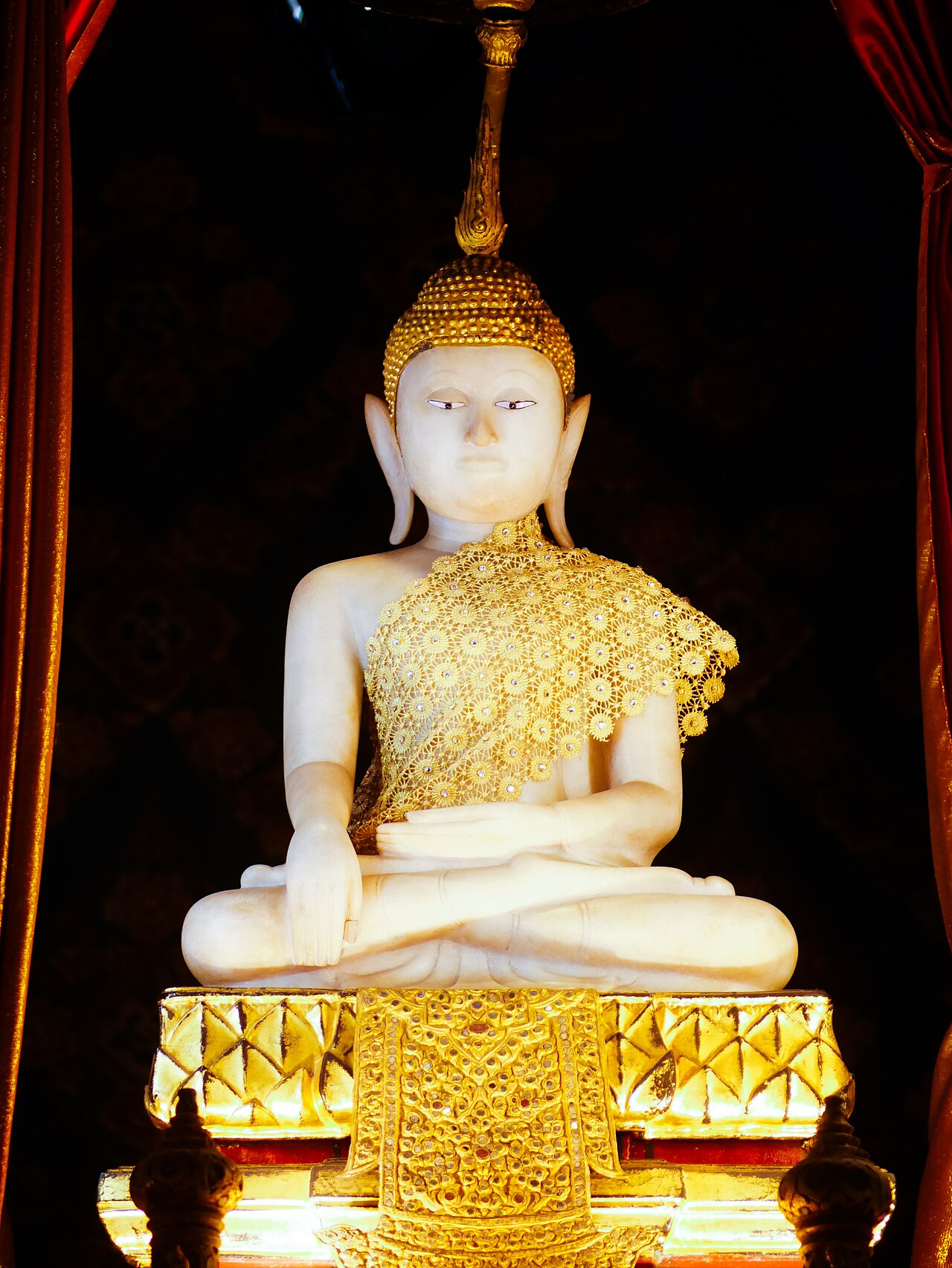
The wat holds a wealth of artistic detail drawn from the long trade between China and Siam: porcelain ornament, Chinese-style figures, and pattern work reminiscent of Wat Pho and Wat Suthat. The principal Buddha image of the ordination hall, carved from a single piece of pure white stone, is enshrined within the Wetchayan Butsabok, a small mandapa King Rama III brought from the Grand Palace. Locally venerated as Luang Pho Khao, the 'white reverend father', the image was given the formal name Phra Phuttha Thewavilas by King Bhumibol Adulyadej in 1971.
A further distinction lies in the bhikkhuni sanctuary to the left of the ordination hall, where fifty-two images of female monks are gathered, a striking and unusual presence among Thai Temples. The Temple is also remembered as the place where the great Rattanakosin poet Sunthorn Phu took ordination under Princess Vilas's patronage; his former dwelling now houses the Sunthorn Phu Museum.
History
Wat Thepthidaram was founded in 1836 by King Nangklao (Rama III) and completed in 1839. The king dedicated the Temple to his eldest daughter Princess Vilas, who joined personally in supporting its construction. Following the Temple's completion the king bestowed upon it the formal name Wat Thepthidaram.
In 1971 King Bhumibol Adulyadej (Rama IX) gave the principal Buddha image its full name, Phra Phuttha Thewavilas. The Temple was registered as a national ancient monument by the Fine Arts Department in 1977, recognising the importance of its sculptural, architectural, and literary heritage.
Visiting
Engage with Wat Thepthidaram
Through the four pathways
Seva सेवा — Service
Offer your time and skills here. The following opportunities are open at Wat Thepthidaram:
No Seva offerings listed yet.
Sādhana साधना — Practice
Learn the worship and practice associated with Wat Thepthidaram:
No Sādhana offerings listed yet.
Sandhāna सन्धान — Wisdom
Unite with the wisdom of this tradition:
No Sandhāna offerings listed yet.
Sādhya साध्य — Giving
Support this sacred place according to your means:
No Sādhya offerings listed yet.
All giving flows directly to Wat Thepthidaram. Adisthan does not take a commission.
Gallery
Related sacred places
 Buddhism
Angkor Wat
Siem Reap · Cambodia · temple
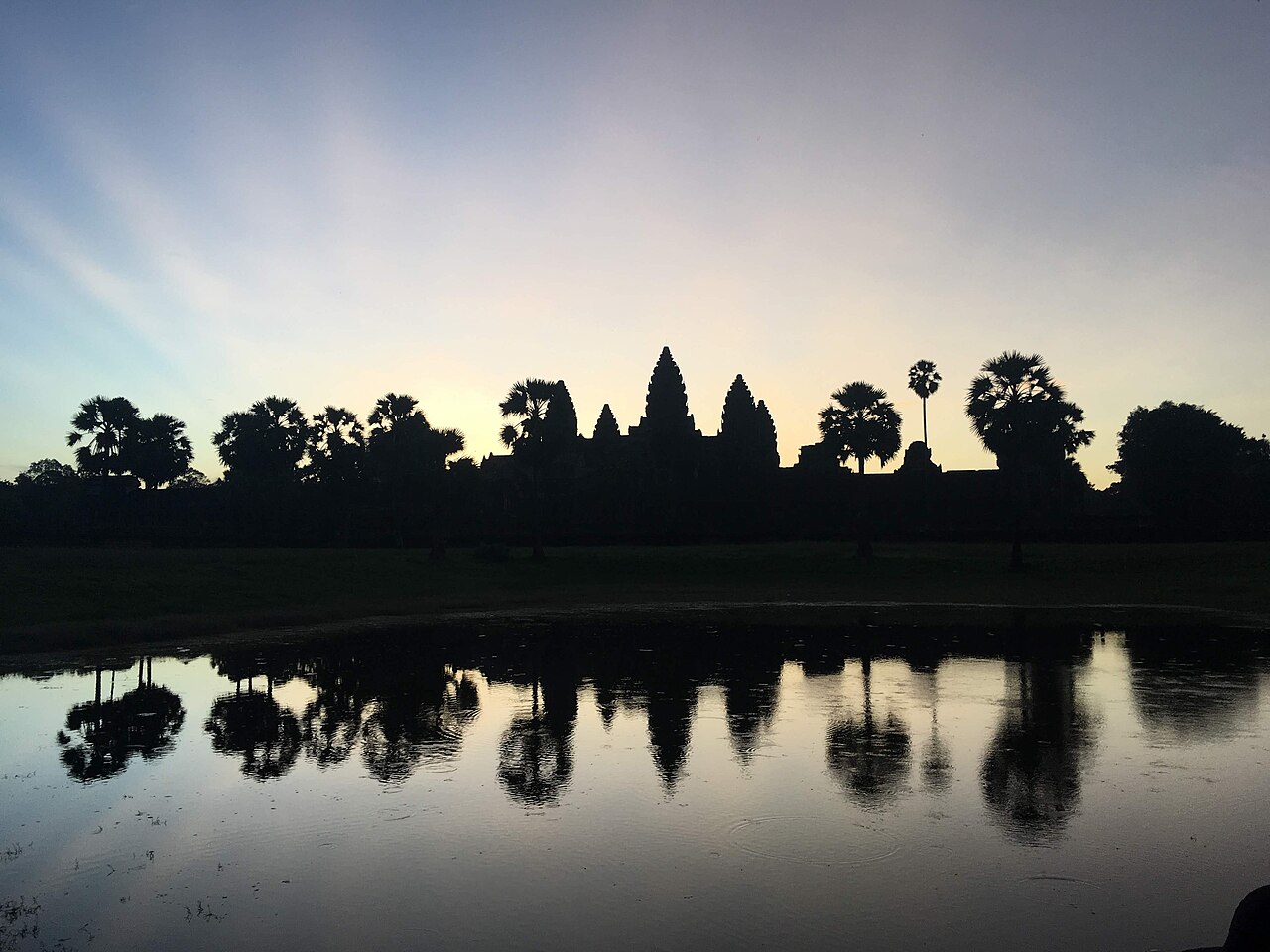
The largest religious monument on earth, built for Lord Vishnu by Suryavarman II in the 12th century and in continuous worship ever since: a living Theravada Buddhist Temple whose five towers stand on the Cambodian flag.
 Buddhism
Bangka Lungshan Temple
Taipei (Wanhua) · Taiwan · temple
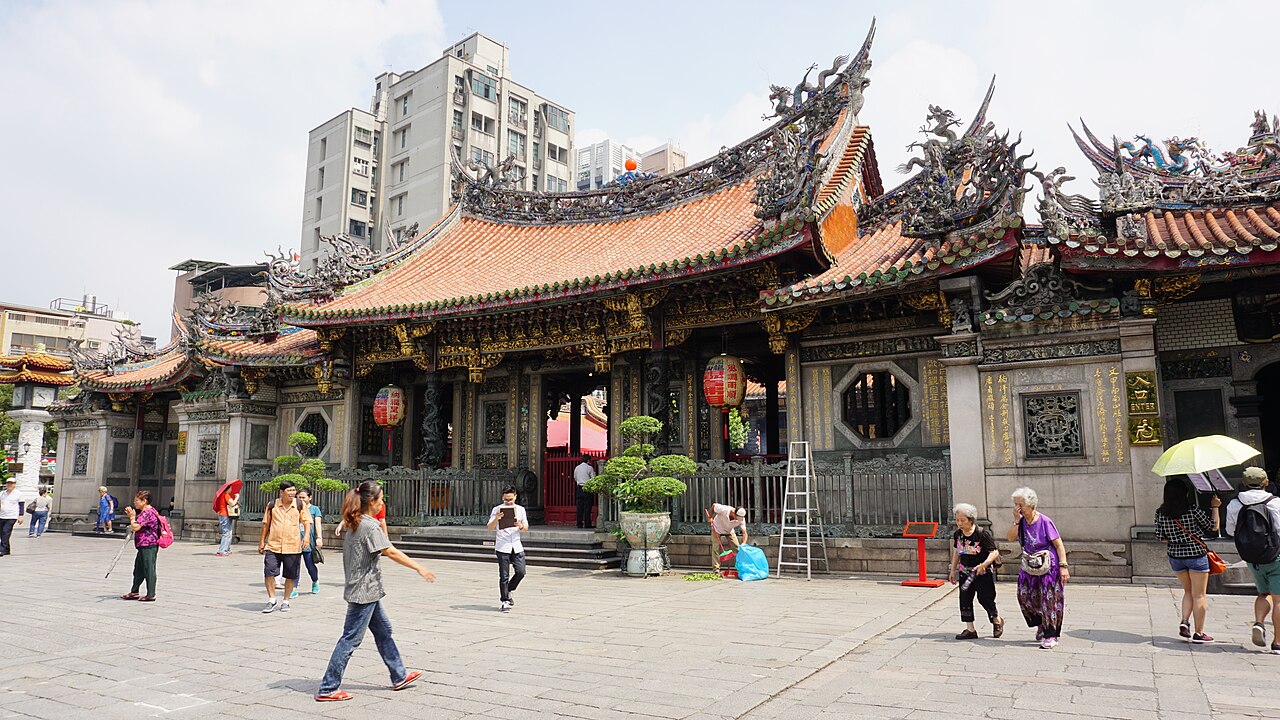
Taipei's mother Temple to Guanshiyin, founded by Fujian settlers in 1738 in the old Bangka quarter: a front hall to the bodhisattva of compassion and a rear hall of more than a hundred Taoist and folk gods, whose Guanyin statue survived the 1945 bombing intact.
 Buddhism
Bengal Buddhist Association
Kolkata · India · monastery
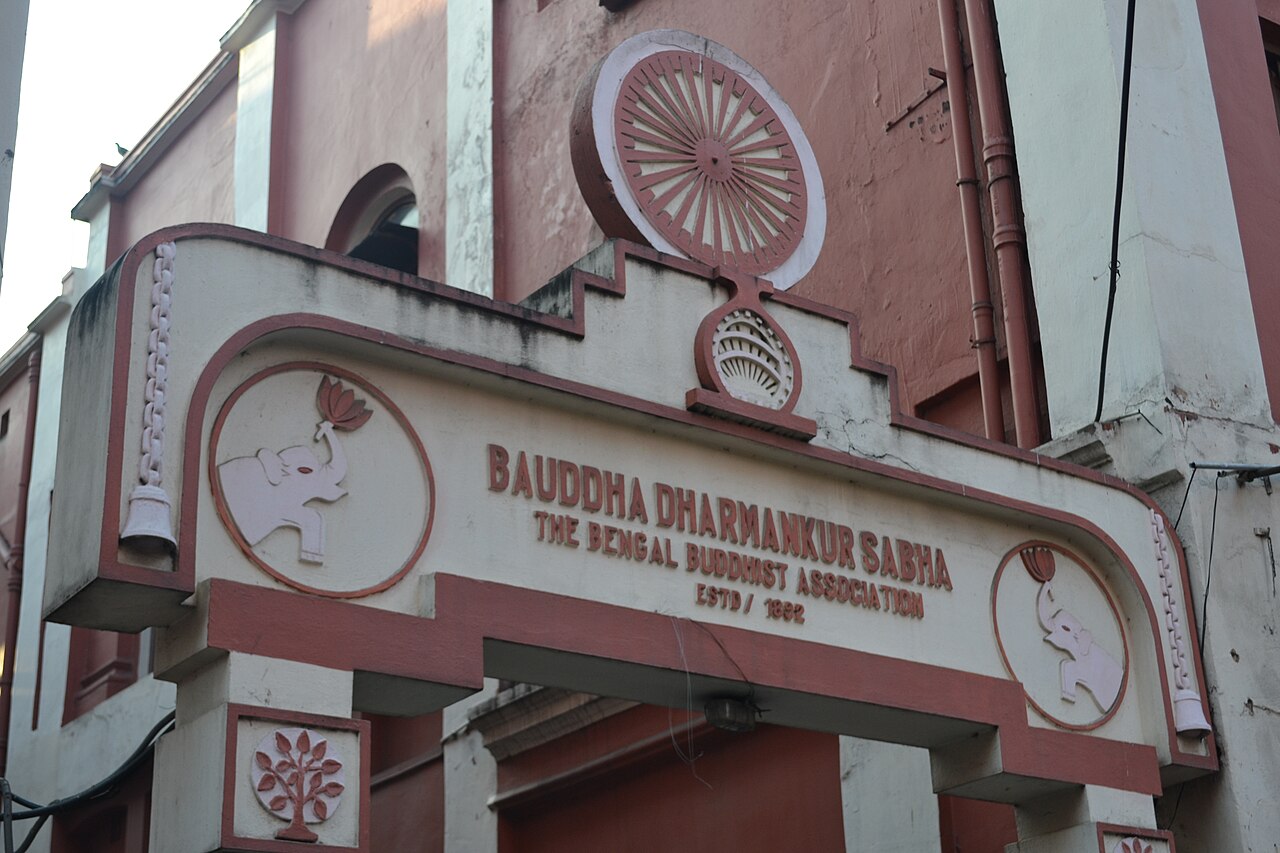
Founded in Kolkata in 1892 by Kripasaran Mahasthavir, the Bengal Buddhist Association, known in Bengali as Bauddha Dharmankur Sabha, raised the Dharmankur Vihara at Bow Barracks in 1903 and has worked for over a century to revive the Dharma in eastern India.
 Buddhism
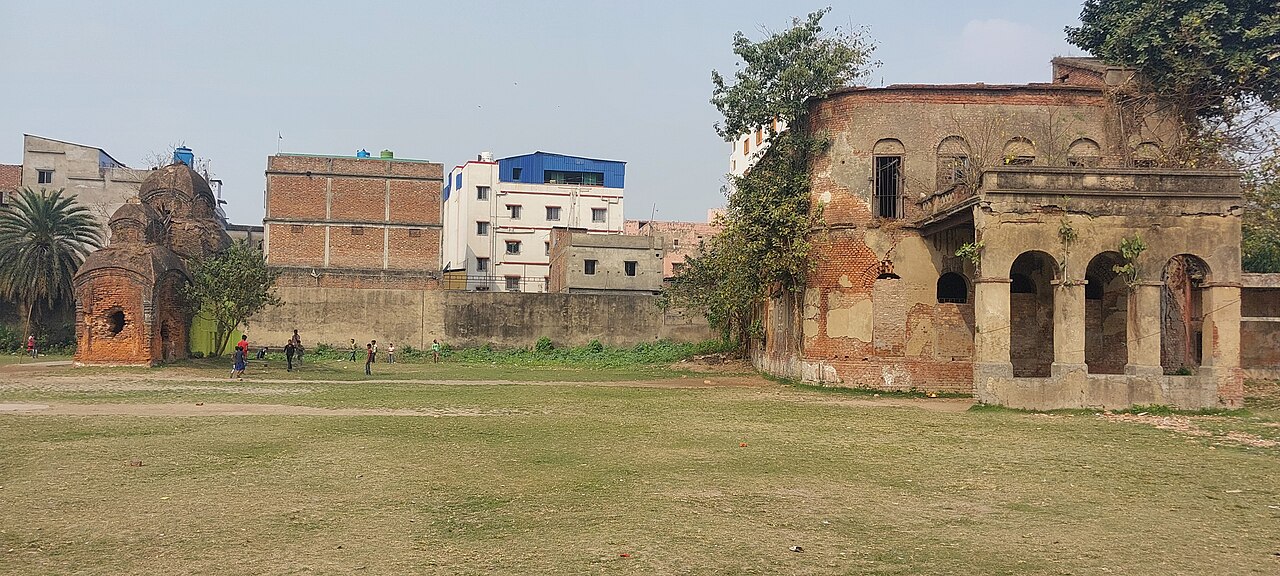
Bhot Bagan Math
Ghusuri · India · monastery
A brick monastery on the Hooghly riverside at Ghusuri, Howrah, founded in 1776 as the first Tibetan Buddhist religious foundation on the plains of India and still known popularly as Mahakal Math for the Tibetan deity images once installed in its sanctum.
 Buddhism
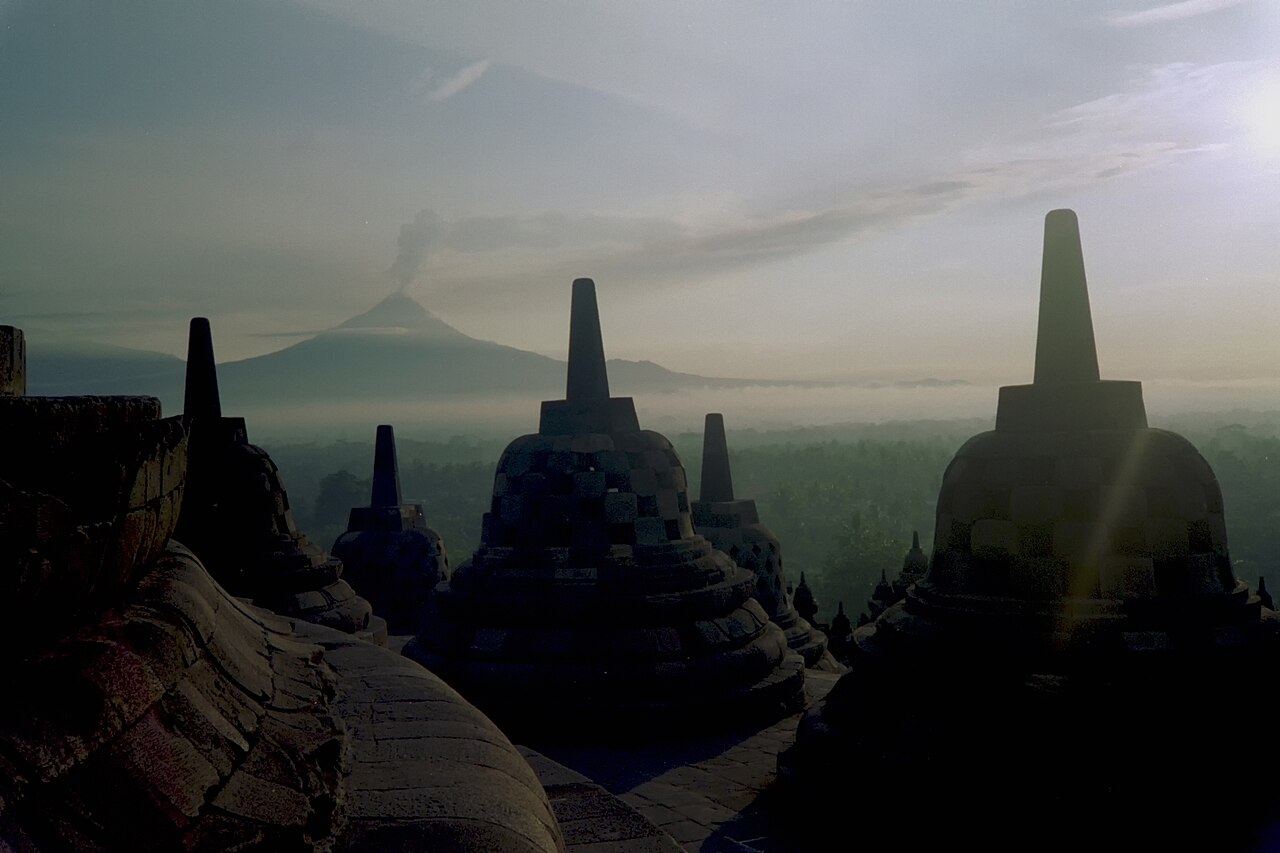
Borobudur
Magelang · Indonesia · temple
The world's largest Buddhist Temple: a ninth-century mandala in stone on Java's Kedu Plain, nine terraces rising through the three realms to 72 latticed stupas, each sheltering a seated Buddha.
 Buddhism
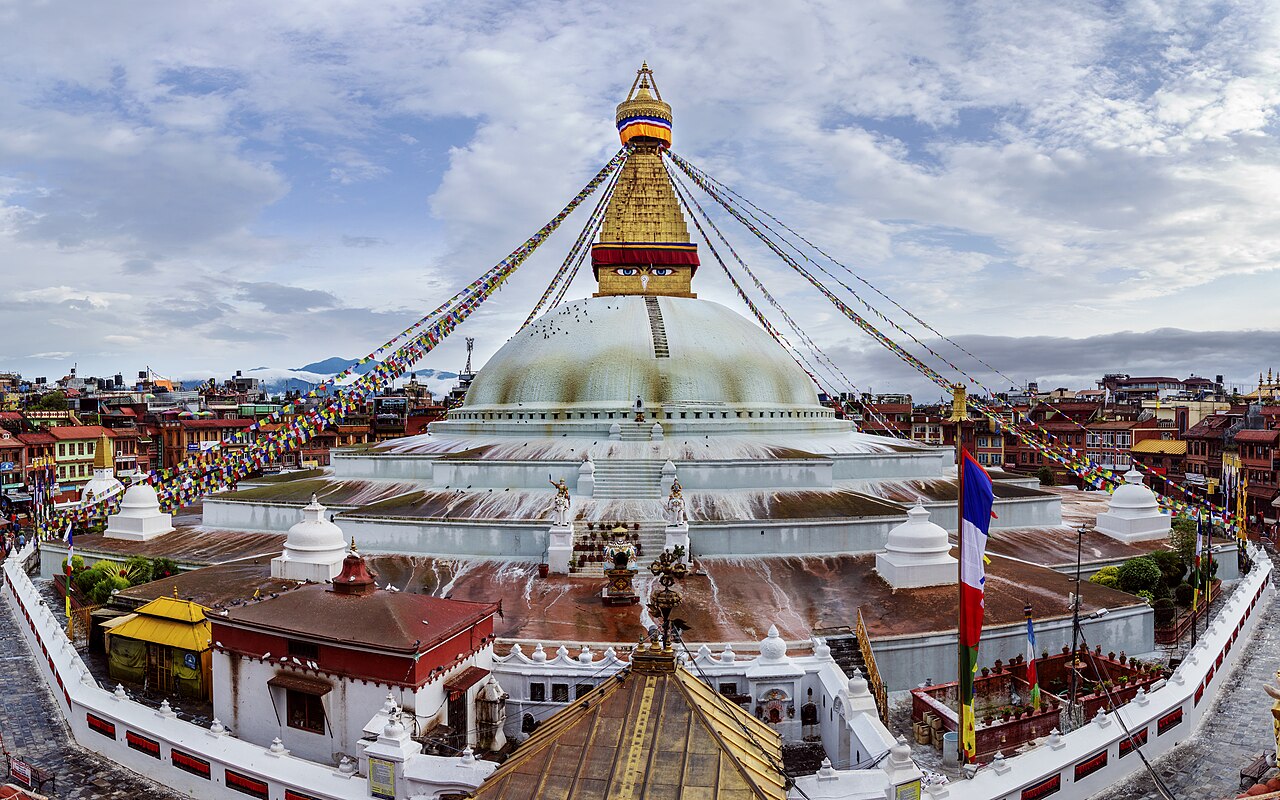
Boudhanath Stupa
Kathmandu · Nepal · stupa
The largest spherical stupa in Nepal, its all-seeing Buddha eyes watching over the kora walked daily by the Tibetan Buddhist community of Boudha, the heart of Vajrayana practice in the Kathmandu Valley.