At dusk every soul walks down, for the mountain belongs to the Tirthankaras.
Be the first to check in
Coming up: Kartik Purnima Yatra (reopening of the hill) · 24 NovEntry tended 11 Jul 2026
Seat of Bhagwan Adinath 3,750 steps to the summit 863 marble derasars · nine tuks Reopens Kartik Purnima · 24 Nov 2026 Gates 6:30 am · all descend by dusk Free · doli chairs at Taleti
You start climbing before the heat, and the mountain gives itself one step at a time: 3,750 of them, cut into the rock and polished smooth by centuries of bare feet. Doli bearers call out their rhythm behind you; ahead, an elderly yatri climbs in silence, counting. Then the gates open and marble breaks over the twin summits like surf, spire behind spire behind spire, hundreds of Temples inside nine walled tuks. This is not a Temple on a mountain. It is a city built for no one to live in.
The holiest tirth of the Shvetambara Jain tradition, honoured as Tirtharaja, king among holy places. Tradition holds that Bhagwan Adinath (Rishabhanatha), the first Tirthankara, sanctified this hill on His many visits, and that His first disciple Pundarik Swami attained moksha here, giving the hill its oldest name, Pundarikgiri.
A marble city of some 863 derasars, raised and raised again across nine centuries, in which no one may sleep. At dusk everyone descends, pujaris included. The night is left to the Tirthankaras alone.
Here the walking is the worship. Pilgrims climb the steps barefoot, and the greatest vow of all, the Navanu yatra, repeats the ascent 99 times, one for each climb tradition ascribes to Bhagwan Adinath Himself.
The hill that was holy before it was built
Jain tradition does not say the Temples made this mountain sacred. It says the mountain was sacred first. The tellings preserved in the Shatrunjaya Mahatmya hold that Bhagwan Adinath, first of the Twenty-four Tirthankaras, walked this hill again and again in the deep past, meditating beneath a rayan tree on the summit and preaching here to those who followed. His chief disciple, Pundarik Swami, is said to have attained moksha on this hill with a vast assembly of munis, and so the hill was first called Pundarikgiri. Jains also call it Siddhakshetra, the field of the liberated, for the souls beyond counting who tradition says found freedom here.
The Temple city itself is a story of destruction answered by devotion. The present Temples rose from the 11th century onward; raiders threw them down, most terribly in 1311, and each time the community rebuilt. Jain memory keeps a list of sixteen great restorations, the uddhars. The sixteenth was completed by Karmashah of Chittor in Vikram Samvat 1587, 1530/31 CE, and the white marble pratima of Bhagwan Adinath he consecrated in the main Temple still receives worship today.
Since 1730 the hill has been in the care of the Sheth Anandji Kalyanji Pedhi, the great Shvetambara trust, which keeps the rules that make this mountain unlike any other: nothing of leather may go up, no food may be eaten on the hill, and no one, not even a pujari, may remain on the summit after dark.
What you'll actually see
1
The climb from Taleti
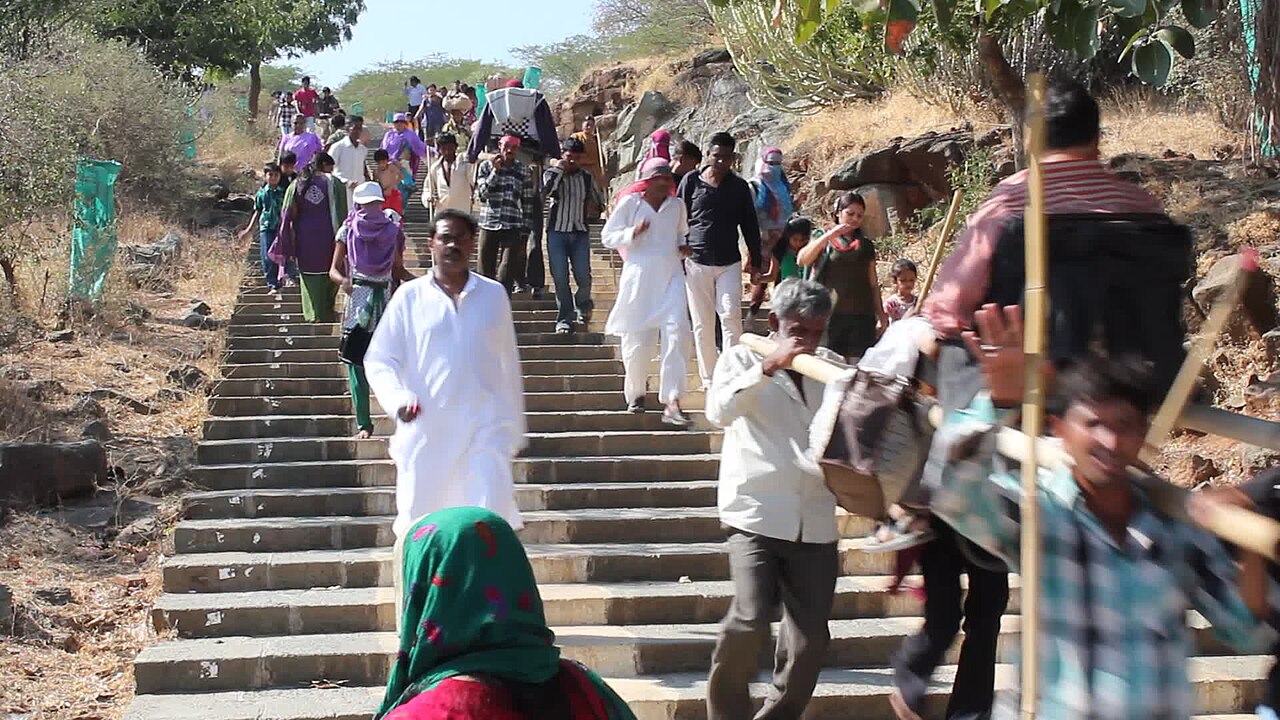
The yatra begins at the Taleti gate below the town, where the 3,750 steps start. The way up takes most pilgrims two to three hours, past resting pavilions and water points, with the plain of Saurashtra slowly opening below. Doli chairs carried by bearers wait at the base for those who cannot climb.
2
The nine tuks
The summit ridge splits in two, and both crests are crowned with walled enclosures called tuks, each a fortress of shrines: Motisha, Hema Vasahi, Bala Vasahi, Chaumukhji and the rest. Inside them the count of Temples runs past eight hundred, from great carved halls to shrines the size of a cupboard, nearly all of them white marble.
3
Dada Adishwar's derasar
The largest Temple holds the seated white marble pratima of Bhagwan Adinath, whom pilgrims here call Dada Adishwar, His emblem the bull carved beneath, the image adorned with gold ornaments set with jewels. This is the pratima consecrated at Karmashah's restoration of 1530/31, and the rayan tree of His meditation is honoured on the summit behind.
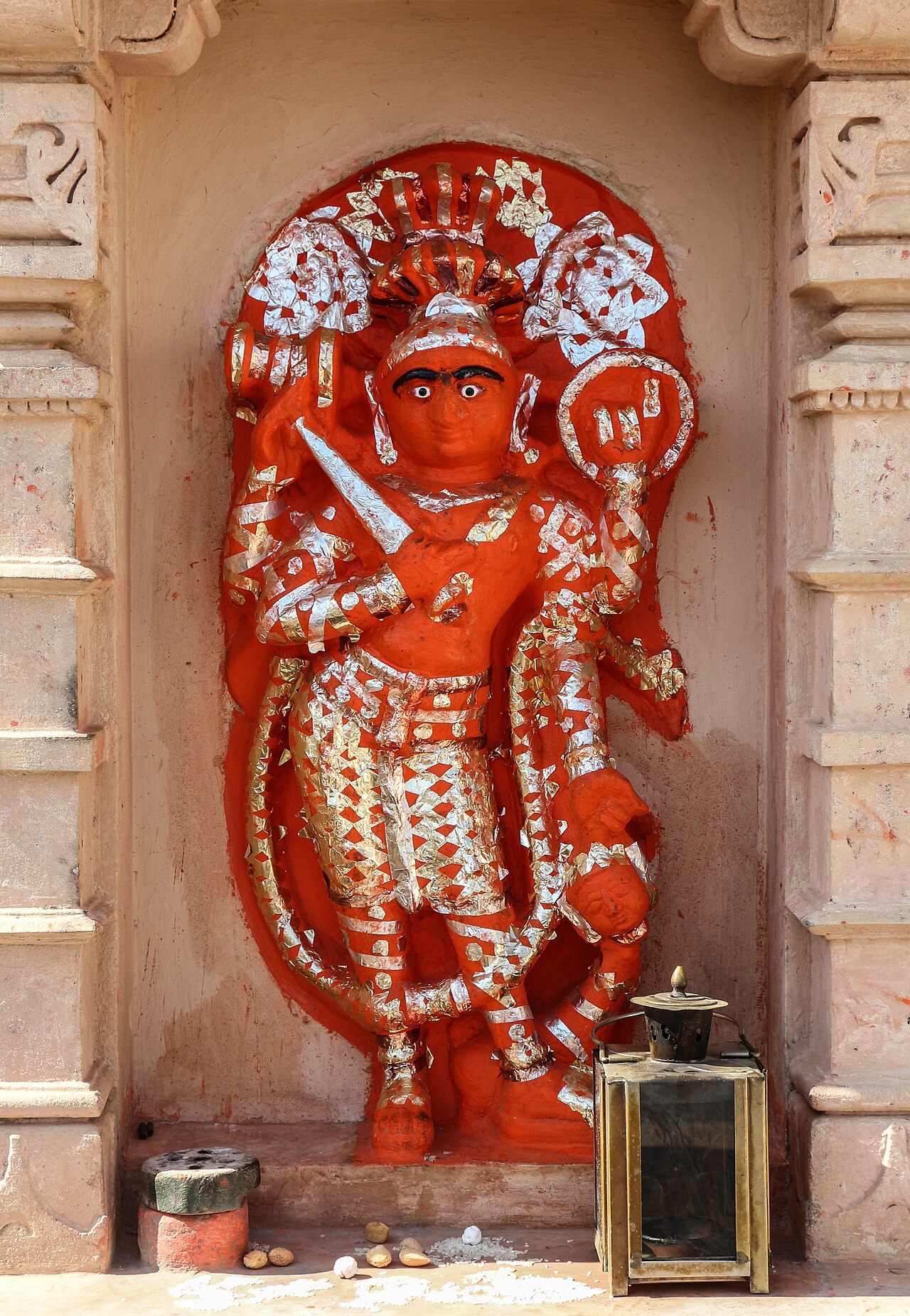
Carved marble sculpture in the Shatrunjaya Temple city, PalitanaPilgrims and doli bearers on the stone steps of Shatrunjaya hill
Carved marble of the tuks, and pilgrims on the steps · photos Bernard Gagnon CC BY-SA 3.0 and Arian Zwegers CC BY 2.0, Wikimedia Commons
The mountain that keeps its own calendar
Kartik Purnima · The hill reopens · 24 November 2026
For the four monsoon months of chaturmas the yatra stops entirely. The rains fill the hill with small life, and in reverence for ahimsa no pilgrim climbs, exactly as Jain monks cease wandering in those months. On Kartik Purnima the gates open again, and tens of thousands of barefoot yatris take the steps on the first morning, many beginning the 99-fold Navanu vow that same day. In 2026 the hill reopens on Tuesday 24 November.
Palitana's dharamshalas fill long before Kartik Purnima; book weeks ahead, and expect the steps to be a moving river of pilgrims that whole day.
Plan your visit
By air
Bhavnagar airport is about 51 km, around 2 hours by road; Ahmedabad, about 215 km, has the nearest international airport.
By rail
Palitana station sits on the Bhavnagar line; the Taleti trailhead is a short auto ride across town.
By road
51 km from Bhavnagar, about 215 km (5 hours) from Ahmedabad; buses run from Bhavnagar and Ahmedabad.
Timings
Hill gates open 6:30 am; everyone must be down before dusk, around 6 pm. Closed for the four monsoon months until Kartik Purnima.
Best time
Start by 6:30 am so the climb is done before the sun is high. November to February is the kind season.
The climb
3,750 stone steps, two to three hours up. Doli chairs can be hired at Taleti; rates vary by season and are posted at the base.
Dress
Modest dress covering shoulders and knees. Nothing made of leather or fur may be carried up the hill: no belts, wallets, or leather straps.
Entry
Darshan is free. The Temples are managed by the Sheth Anandji Kalyanji Pedhi.
Shatrunjaya means place of victory over enemies, and the tradition reads those enemies as the inner ones: anger, pride, deceit and greed.
No food may be eaten or carried on the hill; pilgrims eat after descending, and boiled water is available at points along the steps.
Palitana town below became the world's first legally vegetarian city in 2014, when the sale of meat, fish and eggs was banned after Jain monks fasted for it.
On Fagun Sud 13 (February or March) the Chha Gau yatra circles the whole hill barefoot, a walk of roughly 18 km that draws tens of thousands of pilgrims.
Questions pilgrims ask
Is Shatrunjaya one Temple?
No. It is an entire mountaintop city of Temples, commonly counted at 863 and by some counts closer to a thousand, gathered into nine walled tuks across the twin summits. The main derasar of Bhagwan Adinath is its heart, but a full darshan of the hill is a day among hundreds of shrines.
Can I stay on the summit for sunset or sunrise?
No one may remain on the hill after dusk, pujaris included. Every pilgrim descends before evening, and the mountain stays empty until the gates open again at dawn. The belief is simple: at night the tirth belongs to the Tirthankaras.
Can non-Jains climb the hill?
Yes, respectful visitors of every tradition make the climb. The rules bind everyone equally: no leather or fur, no food on the hill, modest dress, and down before dusk.
Is there any way up besides the steps?
There is no road to the summit. Those who cannot climb hire a doli, a chair slung on poles carried by two or four bearers, from the stand at Taleti.
What is the Navanu yatra?
The 99-fold pilgrimage: ascending the hill 99 times, often within about 45 days, re-enacting the 99 ascents tradition ascribes to Bhagwan Adinath. Yatris doing Navanu walk barefoot, eat one simple meal a day, sleep on the floor and climb two or three times daily. Many add nine more climbs to complete 108.
Dharamshalas and guest houses near this Sthan, shared by devotees. Adisthan takes no bookings and no money; contact each stay directly.
No stays are listed here yet. Know one that serves pilgrims well?
Are you a trustee, pujari, or sevak of the Sheth Anandji Kalyanji Pedhi at Shri Shatrunjay Mahatirth? Claim this page to add true timings, yatra notices, and a way for yatris to actually reach you.